
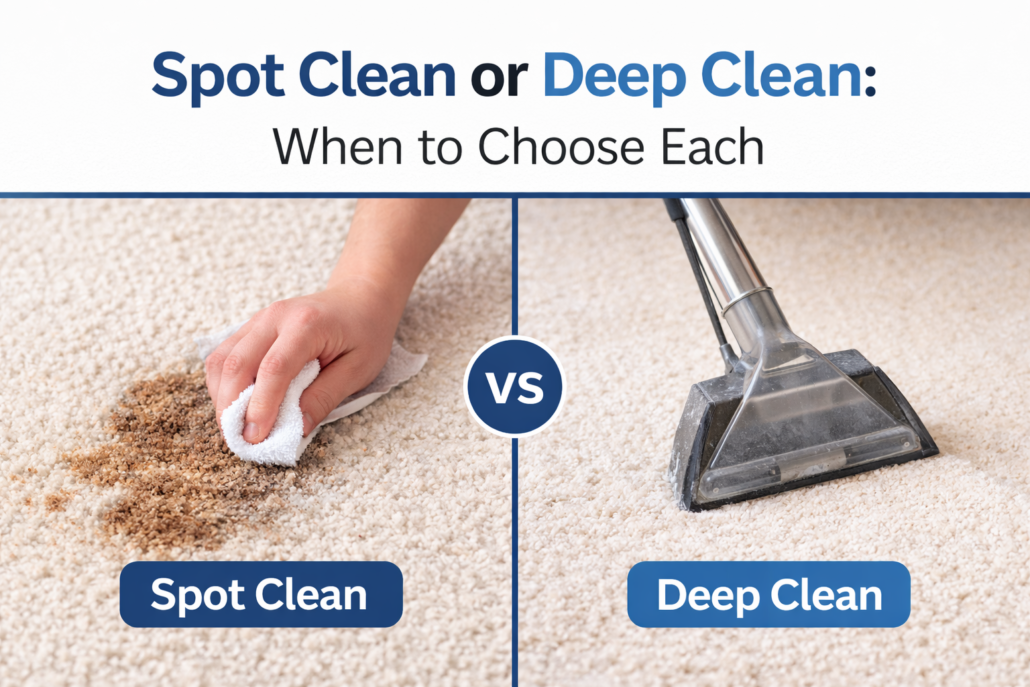
Keeping carpets clean is not just about appearance—it directly affects indoor air quality, hygiene, and the lifespan of your flooring. Homeowners often face a common question when dealing with stains, spills, or general wear: Spot Clean or Deep Clean? While both methods serve an important purpose, choosing the right one at the right time can prevent damage and unnecessary costs while keeping carpets in their best condition.
This guide explains the difference between spot cleaning and deep cleaning, when each method is appropriate, and how to make informed decisions based on carpet condition rather than guesswork.
Understanding Everyday Carpet Soiling
Carpets are exposed to different types of dirt every day. Some issues are localised, such as a coffee spill or muddy footprint, while others develop gradually due to foot traffic, dust, and allergens settling deep within the fibres.
Surface-level stains usually demand immediate attention, whereas long-term buildup requires a more thorough approach. Understanding this distinction helps homeowners avoid over-cleaning or under-cleaning their carpets.
Spot Clean or Deep Clean: How Are They Different?
Spot Clean or Deep Clean — Choosing the Right Method
The difference between these two approaches lies in depth and purpose. Spot cleaning focuses on treating a specific area, while deep cleaning addresses the entire carpet system, including embedded dirt and residue.
Spot cleaning is reactive and targeted. Deep cleaning is preventative and restorative. Each has its place, but using the wrong method at the wrong time can lead to lingering stains or fibre damage.
What Is Spot Cleaning?
Spot cleaning is designed to treat small, visible stains or spills as soon as they occur. It works best when the contamination has not yet penetrated deep into the carpet backing.
For example, knowing how to spot clean wool carpet is essential because wool fibres are sensitive and can react poorly to harsh chemicals or excessive moisture. Gentle blotting and suitable solutions are key to avoiding shrinkage or colour bleeding.
A spot clean carpet approach is ideal for fresh spills, pet accidents, or isolated marks. However, it does not remove the dirt that accumulates throughout the entire carpet over time.
What Is Deep Carpet Cleaning?
Deep cleaning is a comprehensive process that removes embedded dirt, allergens, oils, and residues from carpet fibres. It goes beyond what vacuuming or spot treatment can achieve.
Understanding how to deep clean carpet properly involves using specialised equipment, controlled moisture, and thorough extraction. This method refreshes carpet texture, improves hygiene, and restores overall appearance.
In some cases, homeowners rely on a professional deep clean carpet service to ensure even results, especially in high-traffic areas or homes with pets and children.
Spot Cleaning vs Deep Cleaning: Practical Scenarios
Different situations call for different solutions. A single spill in an otherwise clean room rarely justifies a full deep clean. On the other hand, carpets that look dull, smell musty, or feel sticky underfoot often need more than surface treatment.
The comparison of deep clean vs spot clean becomes clearer when you consider frequency. Spot cleaning is ongoing maintenance, while deep cleaning is periodic restoration.
Another common comparison is spot clean vs hydrosteam, where steam-based methods fall under deep cleaning due to their ability to lift contaminants from deep within fibres rather than treating only surface stains.
Why Regular Spot Cleaning Is Not Enough
While spot cleaning helps control visible stains, relying on it alone can lead to long-term issues. Residue from cleaning solutions, dirt particles, and oils continue to accumulate beneath the surface.
Over time, carpets may appear clean but still harbour allergens and bacteria. This is where the distinction between deep clean vs regular/spot clean becomes important. Deep cleaning resets the carpet, while spot cleaning only manages symptoms.
How Often Should Each Method Be Used?
There is no one-size-fits-all answer. Homes with heavy foot traffic, pets, or allergies may benefit from more frequent deep cleaning. Low-traffic areas may only require periodic deep cleaning combined with routine spot care.
Understanding deep clean vs spot clean as complementary methods—rather than competing ones—helps homeowners maintain carpets effectively without overexposing fibres to unnecessary moisture or chemicals.
Risks of Choosing the Wrong Method
Using spot cleaning repeatedly on old stains can set them deeper into the carpet. Conversely, deep cleaning too often or incorrectly can weaken fibres and backing.
Choosing the correct approach protects both appearance and structure, ensuring carpets last longer and perform better.
Final Thoughts
Carpet care is about balance. Spot cleaning addresses immediate issues, while deep cleaning restores overall cleanliness and hygiene. Knowing when to use each method prevents damage, saves effort, and keeps carpets looking their best for years.
By understanding carpet condition rather than reacting emotionally to stains, homeowners can make smarter, more effective cleaning decisions.
FAQs
What is the main difference between spot cleaning and deep cleaning?
Spot cleaning treats individual stains or spills, while deep cleaning removes embedded dirt and contaminants from the entire carpet.
Can I rely only on spot cleaning for carpet maintenance?
Spot cleaning is useful for immediate issues, but it cannot replace deep cleaning, which is necessary for long-term hygiene and carpet health.
Is deep cleaning safe for all carpet types?
When done correctly, deep cleaning is safe for most carpets. However, delicate fibres like wool require specialised methods and controlled moisture.
How do I know when my carpet needs deep cleaning?
Dull appearance, lingering odours, allergy symptoms, or sticky texture are signs that surface cleaning is no longer enough.
Does frequent cleaning damage carpets?
Incorrect methods or excessive moisture can cause damage. Choosing the right method at the right time helps preserve carpet fibres.