
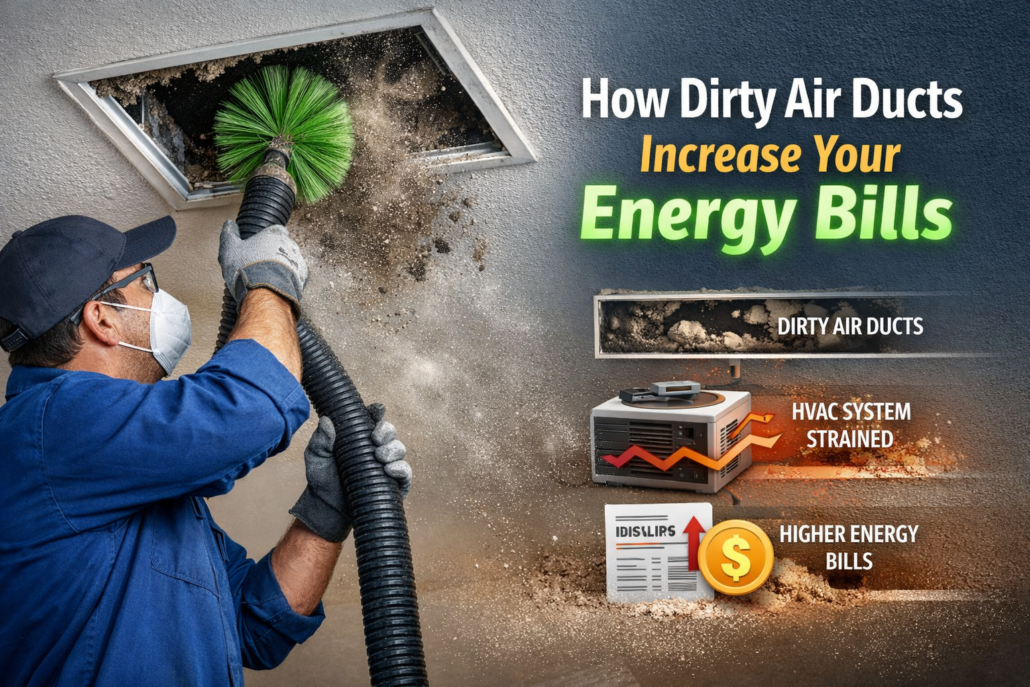
Your HVAC system works every day to keep your home comfortable. But when dirty air ducts become clogged with dust, debris, pet hair, and allergens, your system has to work much harder than normal. This extra strain is one of the main reasons dirty air ducts increase your energy bills, while also raising heating and cooling costs, reducing airflow, and lowering overall HVAC efficiency.
At A1 Red Carpet, many homeowners are surprised to learn that neglected air duct cleaning can directly affect monthly utility bills. Dirty ductwork does not just impact comfort. It can also reduce indoor air quality, shorten HVAC lifespan, and create uneven temperatures throughout the home.
How Dirty Air Ducts Affect Your HVAC System
Over time, dust in air ducts, pet dander, mold spores, and debris collect inside your ductwork. As buildup increases, airflow becomes restricted. Your HVAC system depends on proper airflow to heat and cool your home efficiently. When ductwork becomes dirty, the system has to work harder to push air through the vents.
This extra effort places stress on important HVAC components and increases energy usage. Even a small amount of buildup inside ducts can reduce efficiency and affect indoor comfort. Homes with pets, smokers, recent renovations, or poor filter maintenance often experience faster duct contamination.
When airflow is blocked, your HVAC system must run longer cycles to maintain the desired temperature. This leads to:
- Higher electricity usage
- Increased furnace strain
- Poor airflow
- Uneven heating and cooling
- Faster equipment wear
Impact of Dirty Air Ducts on Energy Efficiency
Problem | Potential Impact |
Restricted Airflow | Up to 30% lower HVAC efficiency |
Clogged Air Ducts | Higher Utility Bills (up to 30%) |
Dirty Ductwork | Increased HVAC runtime |
Poor Air Circulation | Uneven room temperatures |
Dust & Allergens | Reduced indoor air quality |
HVAC System Strain | Expensive repairs and breakdowns |
Signs Your Air Ducts Need Cleaning
Many homeowners ignore the early warning signs of dirty air ducts until energy bills become noticeably higher. Understanding these warning signs early can help prevent expensive HVAC problems and reduce energy waste.
Visible Dust Around Air Vents
Dust buildup around supply vents and return registers often signals excessive contamination inside your ductwork. If dust quickly returns after cleaning, your HVAC system may be circulating debris throughout your home.
Dirty vents often indicate that contaminants are trapped deeper inside the duct system. As air passes through, particles spread into living spaces and settle on furniture, floors, and walls. This problem becomes worse during heavy heating or cooling seasons.
Higher Than Normal Energy Bills
One of the most common signs of clogged air ducts is an unexpected increase in utility costs. Restricted airflow forces the system to consume more energy to heat or cool your home effectively.
Many homeowners notice rising bills during summer or winter without realizing dirty ducts may be responsible. HVAC systems that run longer consume more electricity every month. This added energy usage can significantly increase annual heating and cooling costs.
Uneven Heating and Cooling
Dirty ducts can prevent proper airflow distribution. Some rooms may feel too warm while others stay cold, causing homeowners to constantly adjust the thermostat.
Uneven temperatures often happen because debris blocks airflow to certain areas of the home. This creates hot and cold spots that reduce comfort and force HVAC systems to operate inefficiently.
Weak Airflow From Vents
If airflow feels weak even when the HVAC system is running, blocked ductwork may be restricting circulation. Weak airflow can make rooms uncomfortable and increase the amount of time needed to reach the desired temperature.
Restricted airflow also places extra strain on blower motors and fans, increasing the likelihood of mechanical problems.
Increased Allergy Symptoms
Poor indoor air quality caused by dirty ductwork can trigger:
- Sneezing
- Coughing
- Asthma flare-ups
- Respiratory irritation
- Sinus congestion
Dust, mold spores, pet dander, pollen, and bacteria can circulate through dirty air ducts and affect indoor air quality throughout the home.
How Dirty Air Ducts Increase Energy Bills
Many homeowners do not realize how much dirty ductwork affects energy usage. HVAC systems are designed to move air efficiently through clean duct systems. When ducts become clogged, the system loses efficiency and consumes more energy.
Reduced Airflow
Dust buildup narrows the effective diameter of your ducts. This creates airflow resistance that forces blower motors and HVAC components to work harder.
Reduced airflow prevents heated or cooled air from reaching rooms efficiently. Your HVAC system must operate longer to compensate for restricted circulation. Over time, this increases wear on important components and raises electricity costs.
Longer HVAC Runtime
Your system runs longer cycles to maintain indoor temperatures. Longer runtime means:
- More electricity usage
- Higher monthly bills
- Faster HVAC wear
The longer your system operates, the more energy it consumes. Dirty ductwork can force HVAC equipment to run continuously during extreme weather conditions.
Increased System Strain
Dirty ducts place stress on:
- Blower motors
- Compressors
- Fans
- Heating components
- Cooling coils
This can lead to costly HVAC repairs or early replacement. Overworked systems often experience overheating, mechanical failure, and declining efficiency.
The Hidden Costs of Dirty Ductwork
The financial impact goes beyond utility bills. Dirty air ducts can create long-term expenses that many homeowners overlook.
Shortened HVAC Lifespan
Constant strain reduces the lifespan of expensive heating and cooling equipment. Replacing an HVAC system can cost thousands of dollars.
Routine maintenance and professional duct cleaning help reduce stress on the system and support long-term performance. Cleaner airflow allows HVAC equipment to operate under normal conditions without excessive workload.
Poor Indoor Air Quality
Dirty air ducts circulate:
- Dust
- Pollen
- Pet dander
- Mold spores
- Bacteria
This affects both comfort and health. Poor indoor air quality can become especially problematic for children, older adults, and individuals with allergies or respiratory conditions.
Indoor contaminants continue circulating every time the HVAC system turns on. This can create unpleasant odors and increase airborne particles throughout the home.
More Frequent Repairs
Overworked systems experience more breakdowns and maintenance issues. Routine HVAC maintenance and professional air duct cleaning help reduce unnecessary wear.
Ignoring dirty ductwork can result in blower motor failures, frozen coils, damaged compressors, and airflow problems that require costly repairs.
How Dirty Air Ducts Affect Indoor Air Quality
Your HVAC system continuously circulates air through your home. If contaminants are trapped inside your ductwork, they spread into living spaces whenever the system runs.
Dirty ducts may contain:
- Construction debris
- Dust mites
- Pet hair
- Mold growth
- Bacteria
- Pollen
- Smoke particles
These pollutants can reduce indoor comfort and worsen allergy symptoms. Homes with excessive indoor dust often have contaminated duct systems contributing to poor air quality.
Musty odors coming from vents may also indicate moisture buildup or mold growth inside the ductwork. This should be inspected quickly to prevent larger indoor air quality problems If your energy bills are increasing, your ductwork may need professional cleaning.
DIY Maintenance vs Professional Air Duct Cleaning
Some maintenance can be done by homeowners, but deep contamination usually requires professional service.
DIY Air Duct Maintenance Tips
Homeowners can reduce dust buildup and support HVAC efficiency by following simple maintenance practices:
- Replace HVAC filters every 1–3 months
- Vacuum air vents regularly
- Keep vents unobstructed
- Use air purifiers
- Monitor for mold or odors
Changing air filters regularly is one of the most effective ways to reduce dust entering the duct system. High-quality filters help capture airborne contaminants before they circulate through the home.
When Professional Cleaning Is Necessary
Professional air duct cleaning in Denver may be needed if you notice:
- Persistent dust problems
- Mold growth
- Pest infestations
- Musty odors
- Rising energy bills
- Weak airflow
- Allergy symptoms
Professional equipment removes debris deep inside the duct system that household tools cannot reach.
Benefits of Professional Air Duct Cleaning
Professional cleaning removes deep contamination throughout the duct system. Proper cleaning helps restore airflow and improves HVAC performance.
Benefits Include:
Benefit | Result |
Improved HVAC Efficiency | Lower energy consumption |
Cleaner Indoor Air | Fewer allergens and dust particles |
Better Airflow | Balanced room temperatures |
Reduced HVAC Strain | Longer system lifespan |
Lower Utility Bills | Reduced monthly energy costs |
Professional duct cleaning can also help eliminate odors caused by dust, moisture, pets, or bacteria trapped inside the ductwork.
Homes with cleaner ducts often feel more comfortable because air circulates more evenly throughout the property.
How Often Should Air Ducts Be Cleaned?
Most experts recommend professional cleaning every 3–5 years. However, cleaning frequency depends on several factors including pets, allergies, home size, and HVAC usage.
Homes with heavy dust, smoking, recent renovations, or indoor pets may require more frequent cleaning.
You may also need cleaning sooner if you notice:
- Dust buildup
- Poor airflow
- Mold odors
- High energy bills
- Increased allergy symptoms
Routine inspections help identify contamination before it causes larger HVAC problems.
Preventing Future Duct Contamination
Preventive maintenance helps keep duct systems cleaner for longer periods. Simple habits can improve HVAC performance and reduce energy waste.
Replace Filters Consistently
Dirty filters allow contaminants to enter the HVAC system and circulate through the ductwork. Replacing filters regularly supports cleaner airflow and better efficiency.
Keep Your Home Clean
Vacuuming carpets, reducing indoor dust, and controlling pet hair can help reduce contamination entering the duct system.
Schedule HVAC Maintenance
Routine HVAC inspections help identify airflow problems, damaged ductwork, and system strain before they become serious issues.
Seal Leaky Ducts
Leaks in duct systems reduce efficiency and allow dust to enter the airflow system. Sealing leaks improves airflow and energy performance.
How A1 Red Carpet Helps Improve HVAC Efficiency
We provide professional air duct cleaning services in Denver designed to improve airflow, increase HVAC system efficiency, and help homeowners reduce unnecessary energy costs.
Our experienced technicians use professional equipment to remove dust, debris, allergens, and buildup from your ductwork safely and effectively. Thorough cleaning helps improve airflow while reducing strain on HVAC systems.
Clean ductwork supports better indoor comfort, cleaner air, and more efficient heating and cooling throughout the year.
Improve Indoor Air Quality with Professional Air Duct Cleaning
Dirty air ducts can quietly increase heating and cooling costs, reduce indoor comfort, and force your HVAC system to work harder every day. Regular maintenance and professional air duct cleaning help improve airflow, lower utility bills, and protect long-term HVAC performance.
For homeowners looking to improve indoor air quality and energy efficiency, A1 Red Carpet offers trusted Denver air duct cleaning services designed to keep your home cleaner, healthier, and more comfortable year-round.Contact us today to schedule your service.
Frequently Asked Questions
Q1. Can dirty air ducts increase energy bills?
Ans: Yes. Dirty air ducts restrict airflow and force HVAC systems to work harder, increasing electricity and heating costs.
Q2. How often should air ducts be cleaned?
Ans: Most homes should schedule professional air duct cleaning every 3–5 years depending on pets, allergies, and HVAC usage.
Q3. Do dirty air ducts affect indoor air quality?
Ans: Yes. Dust, mold spores, allergens, and debris inside ducts can circulate throughout the home.
Q4. Will air duct cleaning improve airflow?
Ans: Yes. Removing buildup restores airflow and helps HVAC systems operate more efficiently.
Q5. Can clogged ducts damage HVAC systems?
Ans: Restricted airflow increases strain on HVAC components and may lead to costly repairs or early replacement.