
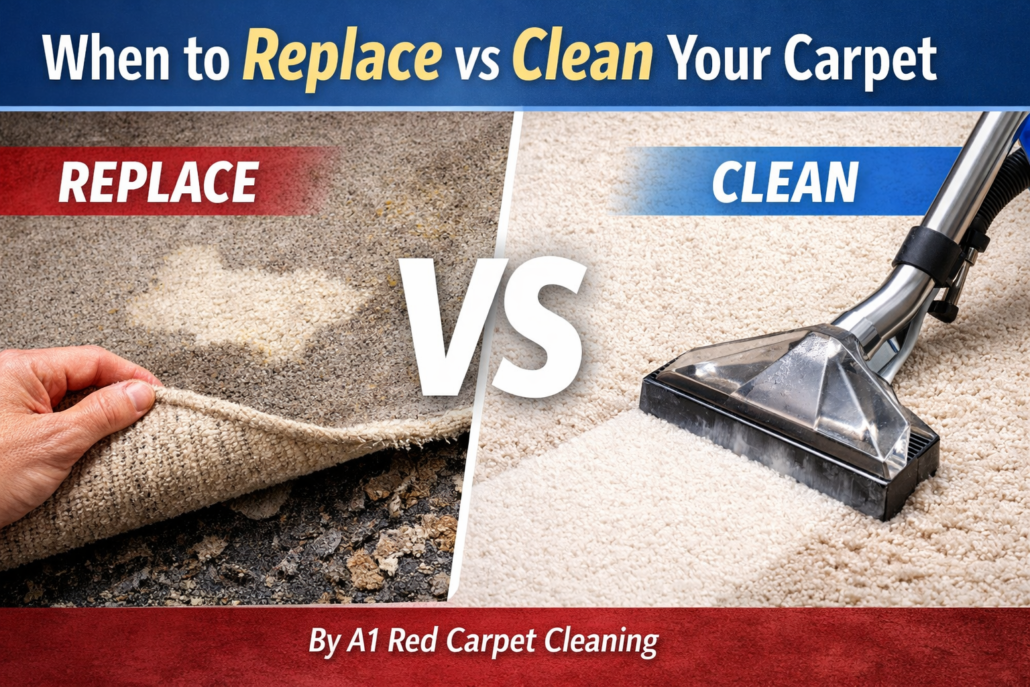
Carpet is one of the most used surfaces in any home or business, yet it’s often the most overlooked when it comes to maintenance decisions. Many property owners struggle with one key question: When to Replace vs Clean Your Carpet? Making the right choice can save thousands of dollars while also protecting your indoor air quality and property appearance.
If you’re unsure when to replace vs clean your carpet, this guide will help you evaluate carpet condition, lifespan, damage level, and cost so you can make the smartest decision for your space.
Understanding Carpet Lifespan Before Deciding
The first factor in deciding when to replace vs clean your carpet is age. Most carpets last between 8 to 15 years depending on quality and foot traffic. High-traffic homes and commercial properties see faster wear, while low-traffic areas maintain condition longer.
If your carpet is still within its functional lifespan and the fibers remain structurally intact, professional cleaning can dramatically improve appearance and extend usability. However, if the carpet is nearing the end of its life cycle, cleaning may only provide short-term improvement.
When Cleaning Your Carpet Is the Right Choice
Understanding when to replace vs clean your carpet starts with recognizing situations where cleaning delivers excellent results.
Carpets that look dull due to embedded soil often respond extremely well to professional deep cleaning. Over time, dust, debris, and oils settle deep into fibers, causing discoloration and matting. Hot water extraction can remove this buildup, restoring softness and brightness.
Stains are another concern homeowners face when deciding when to replace vs clean your carpet. Many spills — including coffee, wine, food, and mud — appear permanent but can be treated successfully with professional stain removal techniques. As long as discoloration hasn’t chemically altered the fibers, cleaning remains a cost-effective solution.
Pet accidents also influence decisions about when to replace vs clean your carpet. If contamination is recent or localized, enzyme treatments can neutralize odor-causing bacteria. This eliminates smells rather than masking them, allowing you to keep your existing carpet.
Cleaning is also ideal when allergy symptoms increase indoors. Carpets trap pollen, dust mites, and pet dander. Deep cleaning removes these irritants, improving breathing conditions and indoor hygiene.
Appearance Issues That Cleaning Can Fix
Many clients wondering when to replace vs clean your carpet are dealing with visual wear rather than structural damage.
Professional cleaning can correct:
Carpet dullness
Traffic lane shading
Minor matting
Surface discoloration
These issues often make carpets look older than they actually are. After a professional service, many carpets regain near-new appearance at a fraction of replacement cost.
When Carpet Replacement Becomes Necessary
While cleaning is powerful, it cannot fix everything. Knowing when to replace vs clean your carpet requires recognizing irreversible damage.
Extensive staining across large sections is one of the clearest signs replacement is needed. Bleach spots, paint saturation, and dye damage permanently alter carpet fibers, making restoration impossible.
Odor is another deciding factor. If pet urine or moisture has penetrated padding and subfloor, smells will return even after deep cleaning. In these cases, replacement becomes the hygienic and practical option.
Fiber breakdown also determines when to replace vs clean your carpet. If you notice fraying, bald spots, or crushed pathways that don’t lift after cleaning, the structural integrity of the carpet is gone.
Water damage is equally critical. Flooding or prolonged moisture exposure can lead to mold growth beneath the surface. Even if the carpet appears fine visually, hidden contamination often requires full replacement for safety.
Padding Condition Matters Too
When evaluating when to replace vs clean your carpet, don’t overlook padding. Carpet comfort and insulation come largely from the cushion underneath.
If padding is flattened, uneven, or deteriorated, cleaning the surface won’t restore comfort. Replacement — at least of the padding — may be required to fully resolve the issue.
Cost Considerations: Cleaning vs Replacement
Budget plays a major role in deciding when to replace vs clean your carpet.
Professional cleaning typically costs a few hundred dollars for most homes. Replacement, however, includes material, labor, padding, and disposal — often reaching several thousand dollars depending on property size.
If cleaning can restore even 70–80% of appearance, many property owners delay replacement and maximize existing carpet value.
Environmental Impact of Your Decision
Another angle to consider when deciding when to replace vs clean your carpet is environmental responsibility.
Cleaning extends carpet life and reduces landfill waste. Manufacturing new carpet consumes raw materials and energy, so maintaining existing flooring is the more eco-friendly choice whenever possible.
Real Estate & Business Image Factors
Property owners in Denver often evaluate when to replace vs clean your carpet before selling or leasing.
Freshly cleaned carpet can significantly improve showing appeal. However, if carpet is visibly outdated, heavily stained, or odorous, replacement may deliver better return on investment and buyer perception.
Businesses must also consider brand image. Worn carpets in offices, retail stores, or event venues can affect customer impressions. In such cases, replacement may be more beneficial long term.
Hybrid Solutions: A Practical Middle Ground
Sometimes the decision isn’t strictly when to replace vs clean your carpet — but how to do both strategically.
Many property owners choose to:
Replace high-traffic zones
Clean low-traffic rooms
Patch damaged sections
This balanced approach controls costs while improving overall appearance.
Professional Inspection Makes the Decision Easier
If you’re still unsure when to replace vs clean your carpet, a professional assessment provides clarity.
Experts evaluate:
Fiber resilience
Stain depth
Odor penetration
Padding condition
Moisture damage
This prevents unnecessary replacement while ensuring cleaning isn’t attempted where it won’t help.
How Maintenance Extends Carpet Life
Proper care reduces the frequency of deciding when to replace vs clean your carpet.
Regular vacuuming removes abrasive soil that wears fibers. Immediate spill treatment prevents permanent staining. Entry mats reduce tracked debris, and annual deep cleaning maintains hygiene and appearance.
With consistent maintenance, carpets can last years longer before replacement becomes necessary.
Final Thoughts: Making the Right Choice
There is no one-size-fits-all answer to when to replace vs clean your carpet. The decision depends on age, damage level, odor, padding condition, and budget.
Cleaning is ideal for maintenance, stain removal, and life extension. Replacement is best for structural wear, deep contamination, and aging flooring beyond recovery.
If you’re evaluating when to replace vs clean your carpet, professional guidance ensures you invest wisely — not prematurely.
Still unsure when to replace vs clean your carpet? Let the experts guide you. At A1 Red Carpet Cleaning, we provide honest carpet inspections, deep cleaning, stain removal, and professional recommendations based on your carpet’s actual condition — not sales pressure.
Whether your carpet needs restoration or replacement guidance, our team is ready to help you make the most cost-effective decision.
Call today to schedule your carpet assessment and bring new life back to your floors.