
TL;DR: Burst pipe clean up has to start fast. The EPA says wet materials should be dried within 24 to 48 hours to prevent mold. Shut off the main water valve, call a plumber to fix the pipe, and call a water damage team to pull out the water and dry your home. Then take a few simple steps this fall so it does not happen again. A1 Red Carpet handles burst pipe clean up 24/7 across the Denver metro.
Burst pipe clean up is the job nobody plans for. It usually starts with a strange hiss behind a wall or a wet spot spreading across the basement carpet on the coldest morning of the year.
In Denver, that morning comes early. The National Weather Service puts the city’s average first freeze around October 7. From then until spring, any pipe in a cold spot is at risk.
The good news is that most of the damage from a burst pipe comes from what happens after it breaks. Fast action keeps a bad day from turning into a big repair bill.
This guide covers why pipes burst here, what to do in the first 30 minutes, when you can handle clean up yourself, how insurance usually works, and how to protect your pipes this winter. A1 Red Carpet has helped Denver homeowners with water damage since 1979, so this is what we see on real jobs every winter.
Why Do Pipes Burst in Denver Winters?
Pipes burst when the water inside them freezes and expands. That builds pressure between the ice and a closed faucet until the pipe splits. In Denver, the pipes most at risk run along outside walls, through unheated basements and crawl spaces, and through attached garages.
The crack is often not where the ice formed. Pressure builds in the section between the ice and the faucet, so the split can show up several feet away.
Denver Water points to the same trouble spots: pipes along exterior walls, in unheated basements, and in attached garages. Research from the Insurance Institute for Business and Home Safety found that pipes in unheated attics start to freeze once outdoor temperatures drop below about 20 degrees.
Denver hits that mark many nights each winter. Big swings make it worse. A sunny 50 degree afternoon can drop to single digits overnight, and homeowners often do not think to protect their pipes on a warm day.
Many burst pipes are found only when the ice thaws. The water starts flowing again, and a small split becomes a steady leak.
What Should You Do in the First 30 Minutes After a Pipe Bursts?
Shut off the main water valve first. Then turn off power to any room where water could reach outlets or cords. Take photos of the damage before you move anything. Call a plumber to fix the pipe and a water damage team to start the clean up. Move rugs and furniture off wet floors.
Every household member should know where the main shutoff is. Denver Water says that in most single family homes it sits in the basement or crawl space, on the wall facing the street.
Once the water is off, open the faucets to drain what is left in the lines. Put down towels to slow the spread. Lift furniture legs onto foil or wood blocks so stains do not transfer into wet carpet.
We cover these steps in more detail in our guide on what to do after water damage. The short version is simple: stop the water, stay safe, document, and call for help.
Can You Clean Up a Burst Pipe Yourself?
You can handle a small leak that wet a few square feet of hard floor, if you dry it the same day. Bigger jobs need professional drying. Water soaks into carpet pad, drywall, and subfloors, where towels and box fans cannot reach it. Hidden moisture is what leads to mold and odor later.
Here is a simple way to decide. If the water stayed on tile or vinyl and you can wipe it all up within an hour or two, you are probably fine.
If water reached carpet, ran under baseboards, or came through a ceiling, call a pro. Carpet pad holds water like a sponge. The top of the carpet can feel dry while the pad and subfloor stay wet for days.
Time matters too. Water from a broken supply line starts out clean. The IICRC S500 standard explains that it can turn contaminated as it sits and picks up dirt and bacteria. A musty smell is a sign that has already started.
How Professional Burst Pipe Clean Up Works
When our team arrives, the first job is pulling out standing water. We use truck mounted extraction, which removes far more water than a shop vacuum can.
Next, we check for hidden moisture with meters. We look inside walls, under baseboards, and beneath the carpet. That tells us what can be dried in place and what needs to come out.
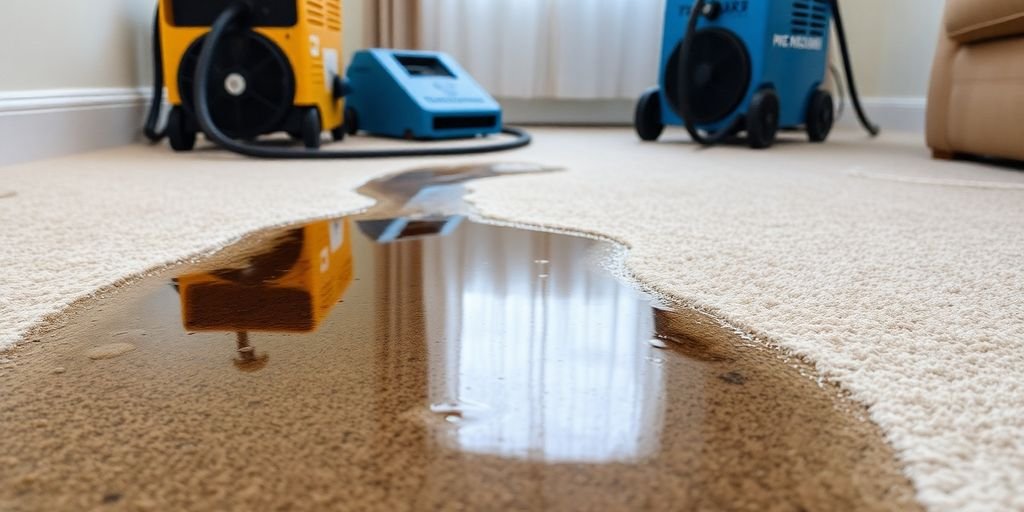
Then we set up industrial air movers and dehumidifiers. Denver’s dry air helps, but it cannot dry soaked pad and subfloor by itself. Most homes need a few days of steady drying.
Carpet can often be saved if the water was clean and we started quickly. Soaked pad usually gets replaced. Once everything tests dry, we clean and deodorize the carpet so there is no lingering smell. Our carpet cleaning service uses products that are safe for kids and pets.
This first stage is called water mitigation. You can learn more in our guide to what water mitigation is and how it differs from restoration.
Does Homeowners Insurance Cover a Burst Pipe?
Usually, yes. The National Association of Insurance Commissioners says standard policies cover sudden and accidental water from a plumbing system. Coverage can be denied if the home was not kept heated or the pipes were neglected. Always check your own policy.
Most policies expect you to keep the home at a minimum temperature, or shut off the water if the house sits empty. That matters for snowbirds and for rental properties between tenants.
The Colorado Division of Insurance recommends calling your insurer as soon as possible. Ask before making repairs. Keep an inventory of everything that was damaged, and save receipts if you have to stay somewhere else while the home dries.
A1 Red Carpet works with insurance claims every week. We document moisture readings and drying progress, which helps your adjuster see exactly what was done.
How to Keep Your Pipes From Freezing This Winter
A little work in October saves a lot of work in January. These steps come from the American Red Cross and Denver Water:
- Disconnect garden hoses and drain your sprinkler lines before the first freeze.
- Insulate pipes in garages, crawl spaces, and attics with foam sleeves or heat tape.
- Keep the garage door closed on cold days if water lines run through it.
- Open kitchen and bathroom cabinet doors on cold nights so warm air reaches the pipes.
- On the coldest nights, let a slow drip run from the faucet farthest from where water enters your home.
- Keep the thermostat steady day and night. If you travel, the Red Cross says to leave the heat at 55 degrees or higher. Denver Water suggests keeping it above 65 if you leave for several days during extreme cold.
If a pipe freezes but has not burst, keep the faucet open and warm the pipe slowly with a hair dryer. Never use a torch or open flame. If you cannot find the frozen spot, call a licensed plumber.
Winter also brings its own carpet problems, from tracked in snow to ice melt residue. When the season winds down, a deep carpet cleaning in Denver clears that out.
Get Help Fast When a Pipe Bursts
Three things matter most. Shut off the water right away. Get wet materials dry within 24 to 48 hours. Protect your pipes before the next hard freeze.
If a pipe has already burst, do not wait for Monday. A1 Red Carpet offers 24/7 water damage restoration in Denver with industrial extraction and drying equipment. Our uniformed, insured technicians have served the Denver metro since 1979, and there are no hidden fees.
Call 303.322.5131 any time, day or night. For anything that is not an emergency, you can book an appointment online. A burst pipe is stressful, but with the right help it is a problem you can put behind you quickly.
Frequently Asked Questions
How long does it take to dry a home after a burst pipe?
Most homes take 3 to 5 days of professional drying with air movers and dehumidifiers. The exact time depends on how much water leaked and how long it sat. Technicians confirm everything is dry with moisture meters, since materials can feel dry on top and still hold water underneath.
Can wet carpet be saved after a burst pipe?
Often, yes, if the water came from a clean supply line and drying starts quickly. The carpet pad usually needs to be replaced because it soaks up water like a sponge. Carpet that sat wet for several days or smells musty may not be worth saving.
At what temperature do pipes freeze?
Pipes in unheated spaces can start to freeze when outdoor temperatures fall below about 20 degrees, according to research from the Insurance Institute for Business and Home Safety. Pipes in heated parts of the home are much safer. Wind, poor insulation, and long cold stretches raise the risk.
Should I call a plumber or a water damage company first?
Shut off the main valve first, then call both. The plumber fixes the pipe, and the water damage team removes the water and dries your home. Starting the drying right away is what prevents mold, so do not wait for the pipe repair to finish.
Does homeowners insurance cover frozen pipes in Colorado?
Standard homeowners policies usually cover sudden water damage from a burst pipe, according to the Colorado Division of Insurance. Claims can be denied if the home was left unheated or the pipes were neglected. Call your insurer as soon as possible and keep a full list of damaged items.