
TL;DR: The most common signs of water damage are stains on ceilings or walls, a musty smell, warped or soft floors, bubbling paint, damp carpet, and a water bill that rises for no clear reason. Most leaks start small and stay hidden. Check under sinks, around the water heater, and in the basement before Denver’s first hard freeze. If you find wet carpet or walls, call A1 Red Carpet at 303.322.5131 for 24/7 water damage help.
The signs of water damage are easy to miss until the repair bill shows up. It might be a brown ring on the ceiling, a musty smell in the basement, or carpet that feels cool and damp under your feet.
Fall is the right time to look. The National Weather Service puts Denver’s average first freeze in early October, and cold weather puts pipes in outside walls and basements at risk. A leak you catch now costs far less than one you find in January.
This guide covers the warning signs, how to test for a hidden leak, where to look in a Denver home, and when to call for help. A1 Red Carpet has handled water damage across the Denver metro since 1979.
What Are the Most Common Signs of Water Damage?
The most common signs of water damage are stains, odors, and changes in how floors and walls look or feel. Any one of these means water is getting somewhere it should not. Two or more together usually means the leak has been going on for a while.
- Stains and rings on ceilings, walls, or carpet. Yellow or brown edges often mean the spot dried and got wet again.
- A musty smell that will not go away, especially in basements and closets.
- Bubbling or peeling paint and wallpaper that lifts at the seams.
- Warped, soft, or cupped floors. Wood boards that rise at the edges and vinyl that lifts are both clues.
- Damp or rippled carpet. Carpet that buckles or feels cool in one spot can mean a wet pad underneath.
- A higher water bill with no change in how your household uses water.
- The sound of running water when every tap is off.
How Do You Find a Hidden Water Leak?
The fastest way to find a hidden leak is the water meter test. Turn off every tap and water appliance, write down the meter reading, and check it again after two hours. If the number moved, water is leaking somewhere in your home.
The EPA WaterSense program recommends a few more simple checks:
- Put a few drops of food coloring in the toilet tank. If color shows up in the bowl within 10 minutes without flushing, the flapper is leaking.
- Look at your winter water bill. The EPA says a family of four using more than 12,000 gallons a month likely has a serious leak.
- Check under sinks and behind toilets for drips, stains, or warped cabinet floors.
Small leaks add up. The EPA estimates that the average household’s leaks waste more than 9,300 gallons of water a year. Most of that is running toilets and dripping faucets. The leaks that cause real damage are the ones you cannot see, inside walls and under floors.
Where Should You Check for Water Damage in a Denver Home?
Check the places where water lines run through cold or hidden spaces. In a Denver home, that usually means the basement, the exterior walls, and anywhere an appliance connects to a water line.
- The basement. Look at the base of walls, around the water heater, and under the laundry area. Finished basements hide leaks behind drywall and carpet.
- Pipes on outside walls. Denver Water lists pipes along exterior walls, in unheated basements, and in attached garages as the most likely to freeze.
- The water heater. Rust at the base or water in the drain pan means it needs attention.
- Washing machine and dishwasher hoses. Look for bulges, cracks, or damp spots behind the machine.
- The attic and ceilings after a hailstorm. Hail can crack shingles, and the leak may not show until the next snow melts.
- Swamp coolers. If your home has an evaporative cooler, make sure it is drained and its water line is shut off for winter.
- Window wells and doors. Melting snow can pool and seep in along the bottom edge.
What Does Water Damage Look Like on Carpet?
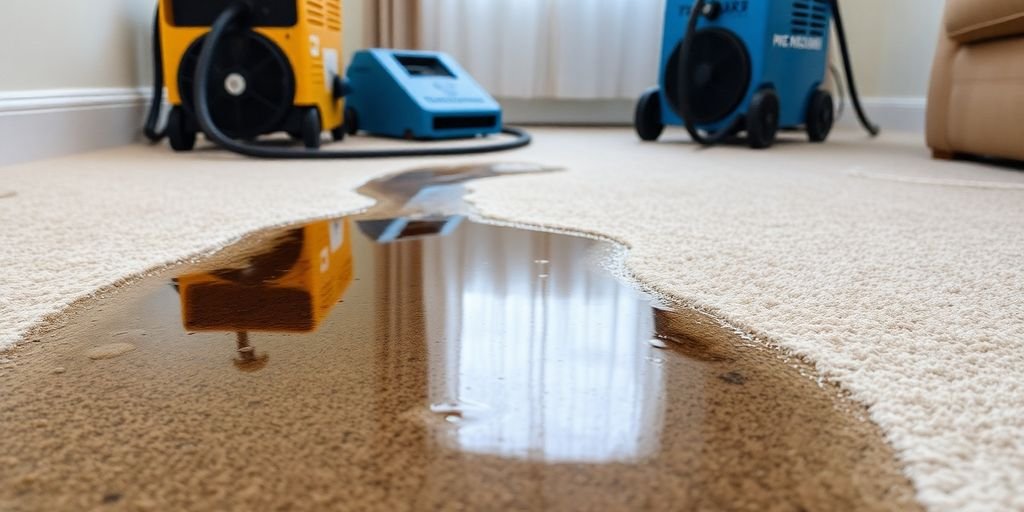
Water damage on carpet usually shows up as a stain ring, a musty smell, or carpet that ripples and pulls loose from the tack strip. The carpet can look dry on top while the pad underneath stays wet. That hidden moisture is where odor and mold start.
Denver’s dry air works against you here. The Colorado Climate Center notes that Colorado’s low humidity favors rapid evaporation, so the top of the carpet can feel normal within a day. The pad and subfloor stay wet much longer. If you press down and feel cool dampness, or see the edge lifting near a wall, the pad likely needs attention. Our guide on how to dry wet carpet covers what you can save.
Carpet that buckles after a leak can often be stretched and reset once it is fully dry. A1 Red Carpet handles carpet repair in Denver after water damage, including restretching and patching.
Why Slow Leaks Cost More Than Sudden Ones
A slow leak often costs more than a burst pipe for two reasons. The damage spreads quietly, and insurance may not pay for it.
Most homeowners policies cover water damage that is sudden and accidental, like a burst pipe or a failed washing machine hose. Damage from a leak that went on for weeks or months is often treated as a maintenance problem. Washington State’s Office of the Insurance Commissioner explains that gradual leaks, like a dripping faucet or a leaking foundation, usually are not covered. Every policy is different, so call your agent with questions about your own coverage.
Time also matters for mold. The EPA says wet areas and items should be dried within 24 to 48 hours to prevent mold growth. A leak you catch early is a quick fix. A leak you find months later can mean new drywall, new carpet pad, and mold cleanup.
When Should You Call a Water Damage Professional?
Call a water damage professional when water has soaked carpet, drywall, or subfloor, when more than one room is affected, or when you cannot find the source. Those are signs the moisture is deeper than fans and towels can reach.
A trained crew uses moisture meters to find where the water went, then sets up air movers and dehumidifiers to dry the structure. Our post on what water mitigation means explains each step. If a line has already split, start with our burst pipe clean up guide.
Always stop the source first. Shut off the water at the main valve if you cannot stop the leak, and call a plumber to fix the pipe itself.
Check Your Home Before the First Hard Freeze
Most water damage starts small, with a stain, a smell, or a meter that keeps moving. Walk through your basement, look under the sinks, and run the meter test this month while the weather is still mild.
If you find wet carpet, damp walls, or a leak you cannot trace, A1 Red Carpet offers 24/7 water damage restoration in Denver with industrial drying equipment. We have served the Denver metro since 1979 with insured, uniformed technicians and no hidden fees, and insurance claims are welcome. Call 303.322.5131 any time, or request an appointment online.
Frequently Asked Questions
What are the first signs of water damage?
The first signs are usually a musty smell, a small stain on a ceiling or wall, or paint that starts to bubble. Floors may feel soft or look slightly warped. A water bill that rises without a clear reason is another early clue. Catching these signs early keeps the repair small.
How can you tell if water damage is old or new?
New water damage usually looks darker and feels wet or soft to the touch. Old damage often has rings with yellow or brown edges, which form when a spot dries and gets wet again. Mold growth and crumbling drywall also point to a leak that has gone on for weeks. A moisture meter gives the clearest answer.
Can water damage be hidden under carpet?
Yes. The carpet pad soaks up water like a sponge, so the carpet surface can feel dry while the pad and subfloor stay wet. Signs include a musty smell, rippling, or carpet pulling away from the wall. Lifting a corner of carpet near the wet area shows whether the pad is damp.
How long does it take for water damage to cause mold?
Mold can start growing when wet materials stay damp for more than 24 to 48 hours, according to the EPA. Thick materials like carpet pad and drywall hold moisture the longest. Drying everything within that window is the best way to prevent mold. Fixing the source of the leak always comes first.
Does homeowners insurance cover water damage from a slow leak?
Usually not. Most homeowners policies cover sudden and accidental water damage, like a burst pipe, but treat slow leaks as a maintenance issue. Coverage depends on your policy, so call your agent with specific questions. Fixing leaks as soon as you find them protects both your home and any future claim.