
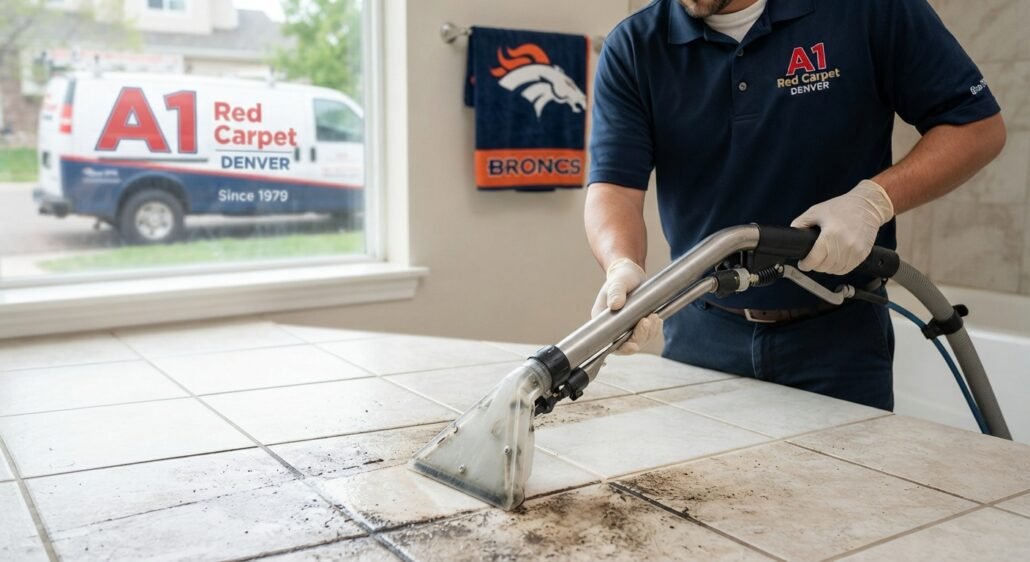
TL;DR: The safest way to clean grout between tiles is applying an alkaline cleaner and extracting it with a wet vacuum, rather than scrubbing with acid or oil based products that damage grout over time. The Tile Council of North America recommends this method for regular maintenance, and bathrooms need more frequent attention since moisture left in grout can grow mold within 24 to 48 hours, according to the EPA. A1 Red Carpet’s tile and grout cleaning restores grout professionally once DIY methods stop working. Call 303-322-5131.
How to clean grout between tiles comes down to using the right cleaner and the right method, since grout is more porous and more easily damaged than the tile around it. Grout absorbs dirt, soap residue, and moisture in a way glazed tile does not, which is why it darkens and grows mold long before the tile itself looks dirty.
Denver bathrooms and kitchens face this constantly, especially in homes with limited ventilation where moisture lingers after a shower. This guide covers the cleaning method that protects grout instead of wearing it down, plus when DIY cleaning has reached its limit and professional cleaning is the better call.
A1 Red Carpet has provided tile and grout cleaning across the Denver metro since 1979.
What Is the Best Way to Clean Grout Between Tiles?
The safest method is applying an alkaline cleaner, letting it sit briefly, then extracting it with a wet vacuum rather than scrubbing it dry. The Tile Council of North America recommends this method because it lifts dirt out of the grout joint instead of grinding it in further with a brush. An all purpose alkaline cleaner works for regular maintenance, while set in stains may need a specialty grout cleaner.
What Should You Avoid When Cleaning Grout?
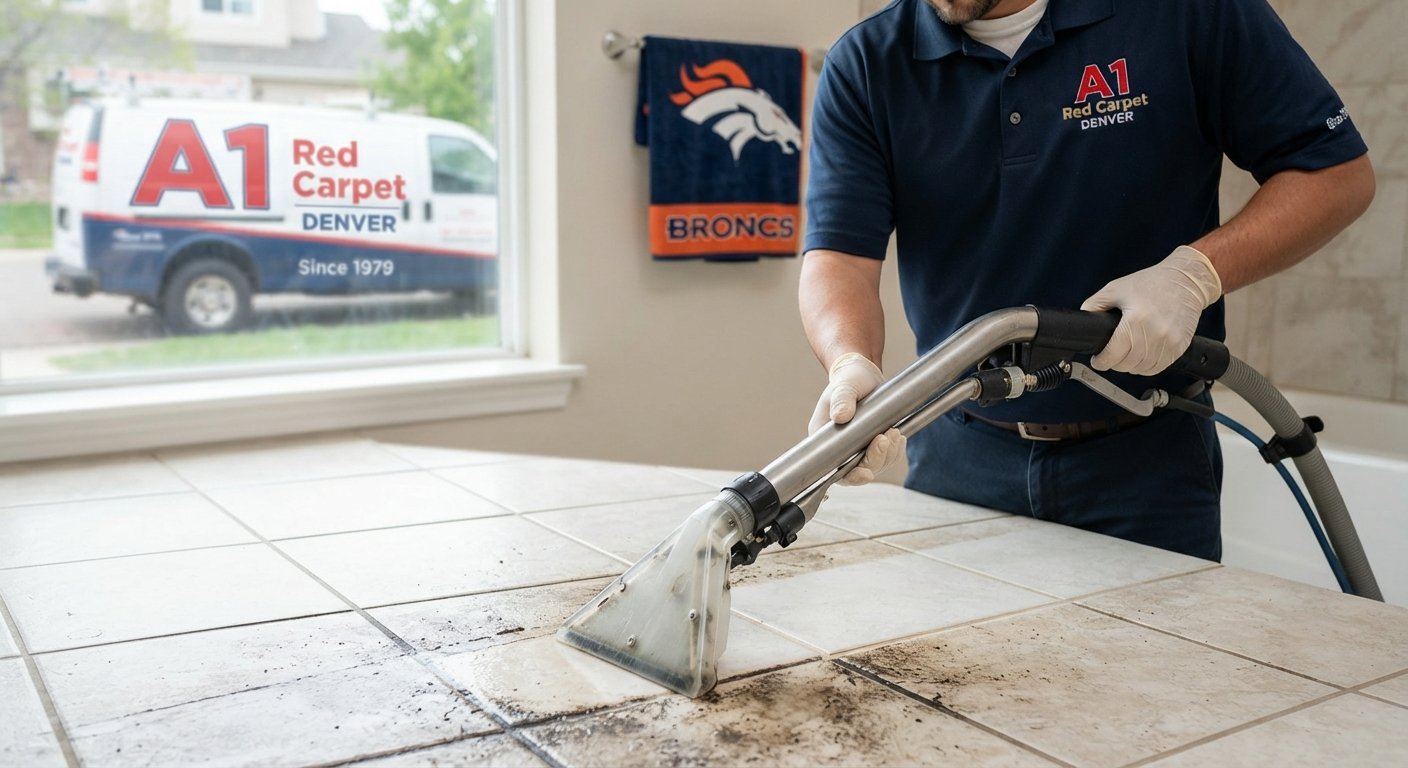
Oil or wax based cleaners leave a film in grout that attracts more dirt over time, according to the Tile Council of North America. Acids can dissolve the cement in grout, and while some professionals use them for severe staining, grout manufacturers generally advise against it since it often leads to needing a full regrout. A stiff wire brush can also wear down grout lines faster than a nylon brush will.
How Often Should You Clean Grout?
Bathroom and kitchen grout benefits from a light cleaning weekly and a deeper clean monthly, since these areas combine moisture with regular use. Grout in lower traffic areas can go longer between deep cleanings, closer to every few months. Waiting longer than that in a bathroom usually means dealing with mold rather than just dirt.
Why Does Grout Grow Mold So Quickly in Bathrooms?
Mold can begin growing on damp surfaces within 24 to 48 hours, according to the EPA, and bathroom grout stays damp longer than almost any other surface in the house. The EPA recommends increasing ventilation and cleaning more frequently in areas that are often or always damp, which describes most bathroom grout. Running a fan during and after every shower makes a measurable difference in how fast that 24 to 48 hour window becomes a problem.
Steam Cleaning and Sealing Grout
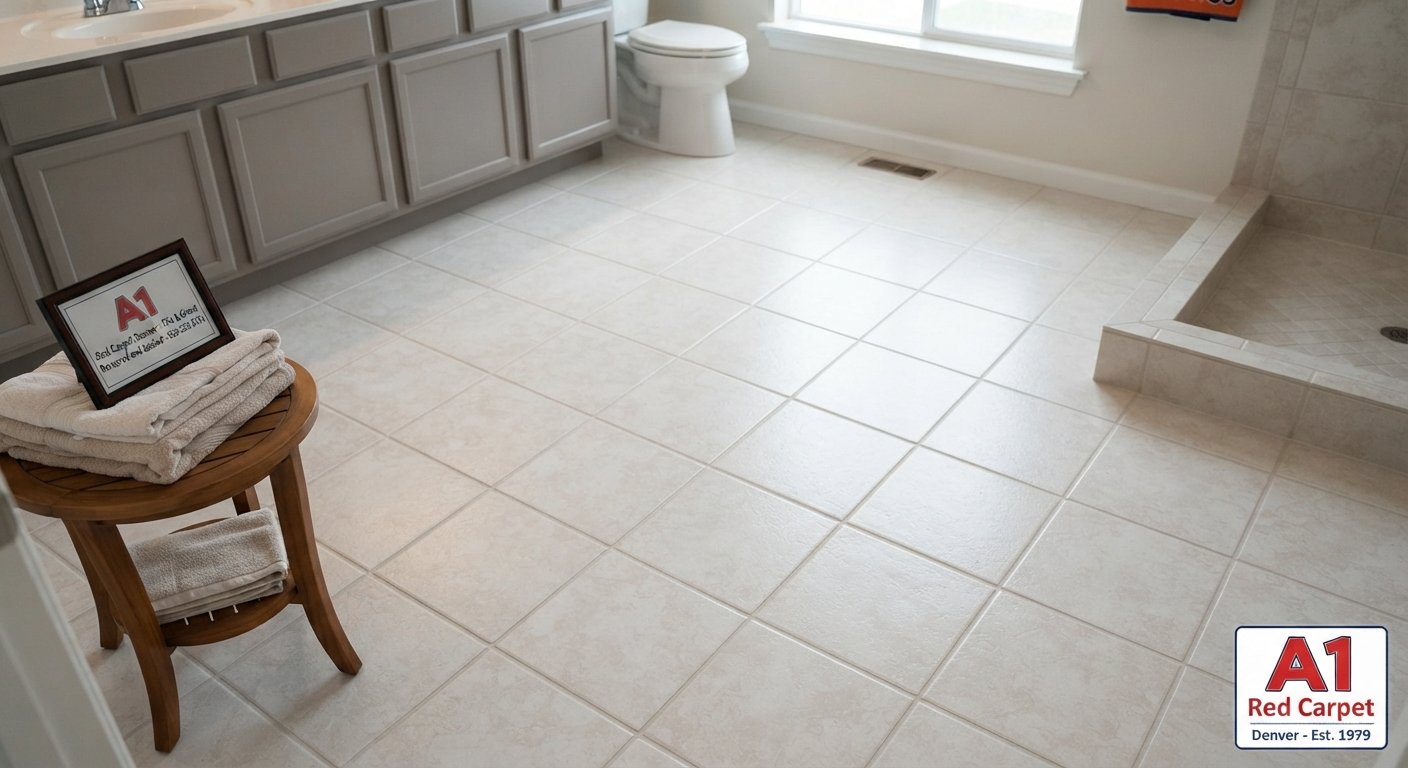
Steam cleaning can loosen dirt in grout without chemicals, which works well for regular maintenance in kitchens and bathrooms alike. Sealing grout after a deep clean slows how fast it reabsorbs dirt and moisture, though the seal needs reapplying periodically since it wears down with foot traffic and cleaning. Neither step replaces a deep clean once grout has already darkened significantly, since sealing traps in whatever grime is already there.
When Should You Call a Professional for Grout Cleaning?
Call a professional once grout has darkened despite regular cleaning, or once mold keeps returning within days of removal. A1 Red Carpet’s tile and grout cleaning uses equipment that reaches deeper into the grout joint than home cleaning tools, restoring grout color without the damage that acids or aggressive scrubbing can cause. The process uses eco safe products that are safe around kids and pets, and same day appointments are available across the Denver metro.
What Does Professional Tile and Grout Cleaning Involve?
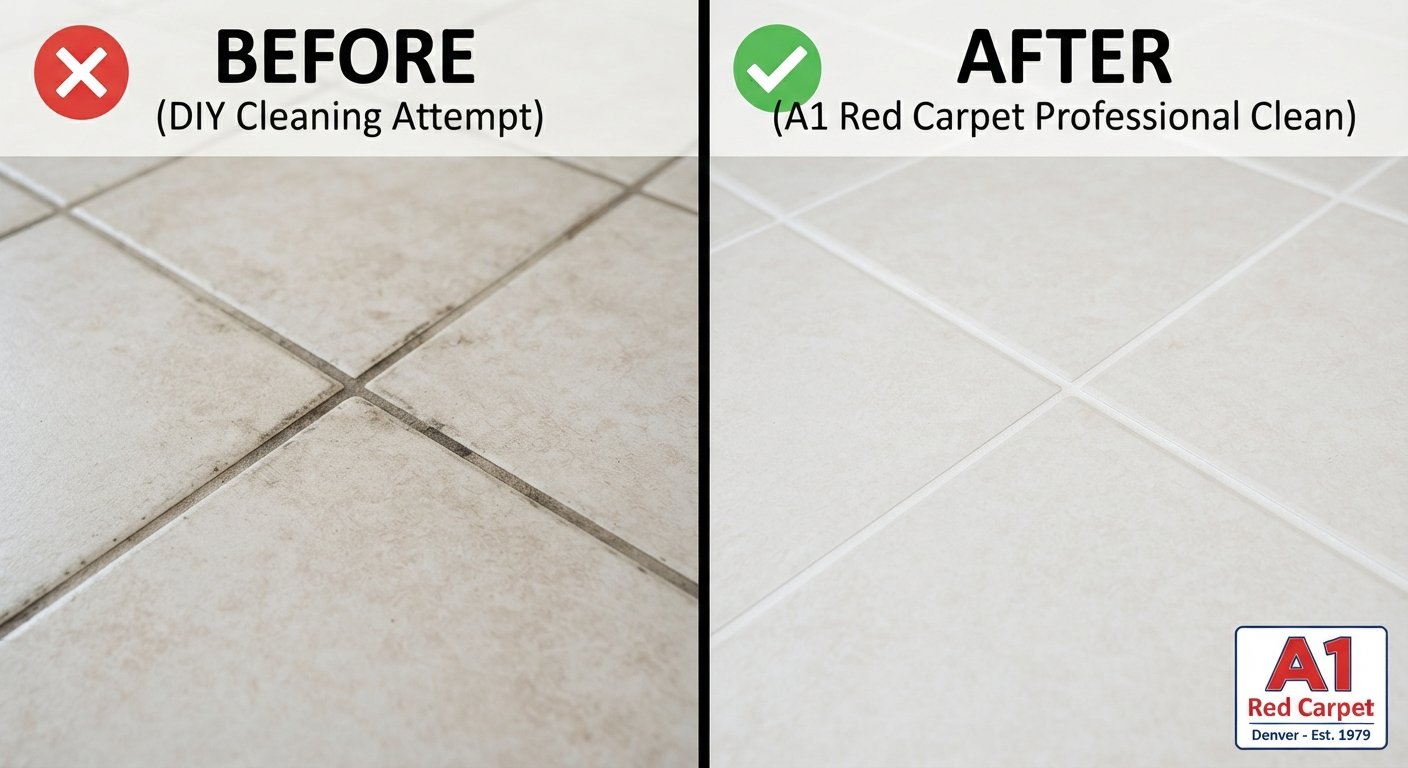
A1 Red Carpet’s process starts with a hot water extraction system that forces cleaning solution deep into the grout joint, then pulls it back out along with the dirt it loosened. This reaches further into the porous grout than a handheld brush or mop can, which is why professional results often look brighter than a DIY attempt on the same grout.
Sealing is typically offered as a follow up step once the grout is fully clean and dry, since sealing dirty grout only traps the existing grime underneath a fresh layer. A sealed floor resists new staining longer and buys more time between deep cleanings, especially in kitchens and bathrooms that see daily moisture.
Keeping Grout Clean Between Deep Cleanings
Grout between tiles needs a different cleaning approach than the tile itself, since it is more porous and more easily damaged by the wrong products. An alkaline cleaner and a wet vacuum, used weekly to monthly depending on the room, keeps most grout in good shape between deep cleanings.
Once grout has darkened past what regular cleaning fixes, or mold keeps returning, that is the point where professional cleaning makes more sense than more scrubbing. A1 Red Carpet has cleaned tile and grout across the Denver metro since 1979, with equipment that restores grout without damaging it.
Call 303-322-5131 for a free estimate, or book through the Appointments page.
Frequently Asked Questions
What is the best homemade grout cleaner?
A mild alkaline solution, similar to the all purpose cleaners the Tile Council of North America recommends, works safely on most grout. Baking soda paste is another common option for light staining. Avoid vinegar or other acidic solutions on a regular basis, since acid can wear down the cement in grout over repeated use.
Why does my grout keep turning black?
Black grout is usually mold or mildew growing in moisture that was not fully removed after cleaning or after regular use. Bathrooms are the most common location since mold can begin growing within 24 to 48 hours of dampness, according to the EPA. Increasing ventilation and cleaning more frequently in that specific area addresses the cause, not just the appearance.
Can a steam cleaner damage grout?
Steam cleaning is generally safe for grout and does not use the harsh chemicals that can wear it down over time. It works best on grout that is dirty rather than already cracked or crumbling, since steam alone will not repair damaged grout. Cracked or missing grout usually needs regrouting rather than deeper cleaning.
How long should you wait before walking on cleaned grout?
Most grout cleaning methods allow normal foot traffic once the surface is dry to the touch, typically within an hour. If the grout was sealed after cleaning, check the specific sealant’s dry time, since walking on a fresh seal too soon can affect how well it bonds.
Is professional tile and grout cleaning worth it?
Professional cleaning reaches deeper into the grout joint than most home methods and restores color without the damage that acids or aggressive scrubbing can cause over time. It is worth considering once regular cleaning stops improving the appearance, or once mold keeps returning within days. A1 Red Carpet provides free estimates so homeowners can weigh the cost against continuing to do it themselves.