
TL;DR
Scrape the solids, blot the moisture, spray a white vinegar and water solution, let it sit for five minutes, blot again, cover with baking soda overnight, then vacuum. If the stain or smell comes back, an enzyme cleaner is your next step. Still not gone? Call A1 Red Carpet at 303-322-5131 for same-day carpet cleaning anywhere in the Denver metro.
How to clean vomit from carpet is one of the most searched cleaning questions in the country, and for good reason. Whether it is a sick child at 2 a.m. or a pet that ate too fast, vomit on the carpet demands fast action. The acids in stomach contents start bonding with carpet fibers within minutes. Wait too long and you are looking at a permanent stain, a lingering smell, or both.
Denver homeowners face an extra challenge. Colorado’s low indoor humidity (often below 30% in winter, according to the Colorado Department of Public Health and Environment) means vomit dries faster than in coastal climates. That concentrated residue traps odor deep in the carpet pad. The good news: A1 Red Carpet has cleaned vomit stains out of Denver carpets for over 45 years, and most fresh stains respond well to a simple six-step process you can do at home.
What Happens When Vomit Sits on Carpet?
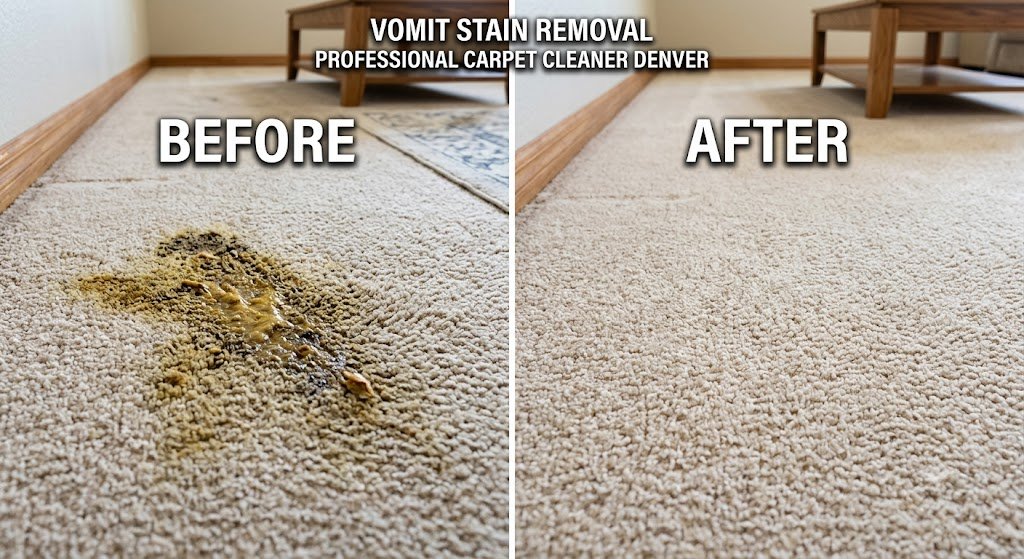
Proteins and bile pigments bond with the fibers, and bacteria start multiplying in the warm, moist environment. The longer vomit sits, the deeper it penetrates the carpet backing and pad.
The EPA classifies biological matter in carpet as a source of indoor air contamination. Bacteria, mold spores, and allergens thrive in damp carpet fibers. In Denver’s dry climate, the surface may feel dry to the touch while moisture and bacteria remain trapped underneath. That is why the smell keeps coming back on warm days, even after you think you cleaned it.
Bottom line: the first 15 minutes after a vomit incident determine whether you are dealing with a quick cleanup or a lasting problem.
How to Clean Fresh Vomit from Carpet (6 Steps)
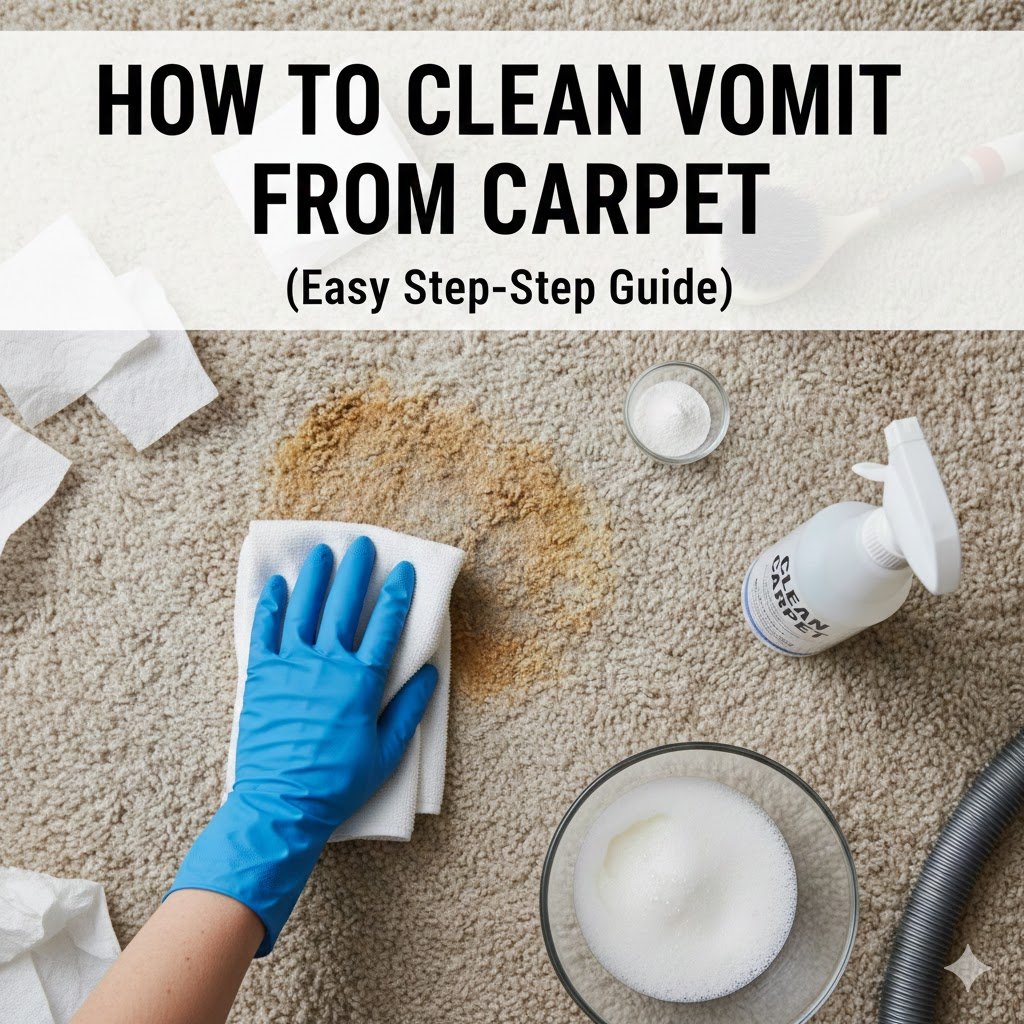
Gather your supplies first so you do not pause mid-cleanup. You need rubber gloves, paper towels, a spoon or spatula, a spray bottle, white vinegar, mild dish soap, baking soda, and a vacuum cleaner.
Step 1: Protect Yourself
Put on rubber gloves and open a window. The CDC recommends wearing gloves when cleaning up vomit because it can carry contagious viruses like norovirus. Keep children and pets out of the room.
Step 2: Remove the Solids
Use a spoon, spatula, or piece of folded cardboard to scoop up solid material. Work from the outside edge toward the center to avoid spreading the stain. Do not press down. Bag everything in a sealed plastic bag and discard immediately.
Step 3: Blot the Moisture
Press paper towels or a clean white cloth onto the wet area. Do not rub or scrub. Rubbing pushes the liquid deeper into the carpet fibers and spreads the stain sideways. Replace towels as they absorb moisture and keep blotting until the area is only slightly damp.
Step 4: Spray a Vinegar Cleaning Solution
Mix one cup of warm water, one tablespoon of white vinegar, and one teaspoon of mild dish soap in a spray bottle. Shake well and spray the stained area evenly. Let the solution sit for five minutes so it can break down the proteins and neutralize the acid.
Step 5: Blot Again and Rinse
Blot the area with clean paper towels to lift the dissolved residue. Then lightly spray or dab clean warm water over the spot and blot one more time. This rinse step removes soap residue that would otherwise attract dirt later.
Step 6: Apply Baking Soda and Let It Dry
Sprinkle a thick layer of baking soda over the entire affected area. Baking soda absorbs remaining moisture and neutralizes odor through a simple acid/base reaction. Leave it for at least 8 to 12 hours (overnight is best). Vacuum thoroughly the next morning.
Denver’s dry air works in your favor here. Baking soda absorbs faster in low-humidity environments, so overnight treatment is usually enough. In more humid climates, this step can take 24 hours.
How Do You Get Rid of Vomit Smell in Carpet?
Enzymes break down the organic proteins that cause the odor at a molecular level. Vinegar and baking soda mask or neutralize surface smell, but they cannot reach proteins that have soaked into the carpet pad.
Enzyme based carpet cleaners are available at most Denver hardware stores and pet supply stores. Look for products labeled for organic stain and odor removal. Apply according to the manufacturer’s instructions, allow proper dwell time (usually 10 to 15 minutes), and blot dry.
If the smell returns after enzyme treatment, the vomit likely soaked through to the carpet pad. At that point, surface cleaning will not solve the problem. Professional using truck mounted hot water extraction is the next step. The IICRC S100 standard for professional carpet cleaning describes hot water extraction as a method that reaches the carpet backing and pad, which is exactly where trapped odor lives.
How to Clean Dried Vomit from Carpet
Then follow the same vinegar solution, blot, baking soda, vacuum sequence from the fresh stain steps above.
Dried vomit is harder to remove because the proteins have bonded with the carpet fibers during the drying process. You may need to repeat the vinegar treatment two or three times. For stains that have been dried for more than 48 hours, an enzyme cleaner applied after rehydration gives you the best chance of full removal.
If the discoloration remains after multiple attempts, a professional is likely needed. A1 Red Carpet’s technicians use targeted pre spray treatments and truck-mounted extraction to remove set-in stains that DIY methods cannot reach.
Does Dog Vomit Stain Carpet Differently Than Human Vomit?
The yellow or orange tint from bile is particularly stubborn on light colored carpet. Enzyme cleaners are essential for pet vomit because vinegar alone does not break down animal bile proteins effectively.
If your dog or cat vomits on the carpet, follow the same six steps above but substitute an enzyme cleaner for the vinegar solution in Step 4. Enzyme products designed for pet stains contain specific bacterial cultures that digest the proteins found in animal vomit.
For recurring pet accidents, consider professional pet stain and odor removal. A1 Red Carpet uses green cleaning products that are safe for pets and children while still removing the biological residue that attracts pets back to the same spot.
When Should You Call a Professional Carpet Cleaner?
DIY methods work well for small, fresh vomit stains. But there are three situations where professional cleaning is the right call.
Large spills spread into the carpet pad before you can blot them up. Surface cleaning will not reach the contamination underneath.
Recurring odor means the proteins soaked through to the pad or subfloor. Only truck-mounted hot water extraction has the pressure and suction to flush and extract material from that depth.
Wool carpet, oriental rugs, and specialty fibers react unpredictably to vinegar, hydrogen peroxide, and enzyme cleaners. Professional technicians assess the fiber type before choosing a cleaning method.
A1 Red Carpet has served Denver and the entire metro area since 1979. Our technicians arrive with truck-mounted equipment, industrial enzyme solutions, and the training to handle every carpet type. We offer same-day appointments, and all work is guaranteed in writing.
Call 303-322-5131 or book online. Tough spot that will not come out? See our carpet stain removal service.
The Bottom Line
Fresh vomit stains respond well to a simple process: scrape, blot, vinegar spray, baking soda, vacuum. For stubborn odor, an enzyme cleaner is your best DIY option. And if the smell keeps coming back or the stain will not budge, professional hot water extraction is the proven solution.
A1 Red Carpet has been cleaning Denver carpets for over 45 years. We use eco-safe products, offer same-day service, and guarantee every job in writing. Call 303-322-5131 for a free estimate.
Frequently Asked Questions
Can vomit permanently stain carpet?
Yes. Stomach acid (pH 1.5 to 3.5) can bleach or discolor carpet dye if left untreated for more than 30 to 60 minutes. Light colored carpets show discoloration faster, but dark carpets can also suffer permanent dye damage. Fast action within the first 15 minutes gives you the best chance of avoiding a permanent mark.
Is vinegar or hydrogen peroxide better for vomit stains?
Vinegar is safer for most carpet types and works well on fresh stains. Hydrogen peroxide (3% solution) can remove stubborn discoloration but carries a bleaching risk on darker carpets. Always test hydrogen peroxide on an inconspicuous area first. For most homeowners, the vinegar and baking soda method is the better starting point.
How long should baking soda sit on a vomit stain?
At least 8 to 12 hours, ideally overnight. Baking soda needs time to absorb moisture and neutralize odor. In Denver’s low-humidity climate, overnight treatment is usually sufficient. Vacuum it up thoroughly the next morning. If odor remains, repeat the application for another 8 hours before moving to an enzyme cleaner.
Can steam cleaning remove old vomit stains?
Professional hot water extraction (often called steam cleaning) is the most effective method for removing old, dried vomit stains. The IICRC S100 standard describes hot water extraction as a process that reaches the carpet backing and pad, where old stain residue accumulates. DIY steam cleaners typically lack the pressure and suction power of professional truck-mounted systems.
How much does professional carpet cleaning cost for vomit removal?
Pricing depends on the size of the affected area, the carpet type, and whether the stain has reached the pad. A1 Red Carpet provides free estimates with no hidden fees and no trip charges. Call 303-322-5131 for a quote specific to your situation.