
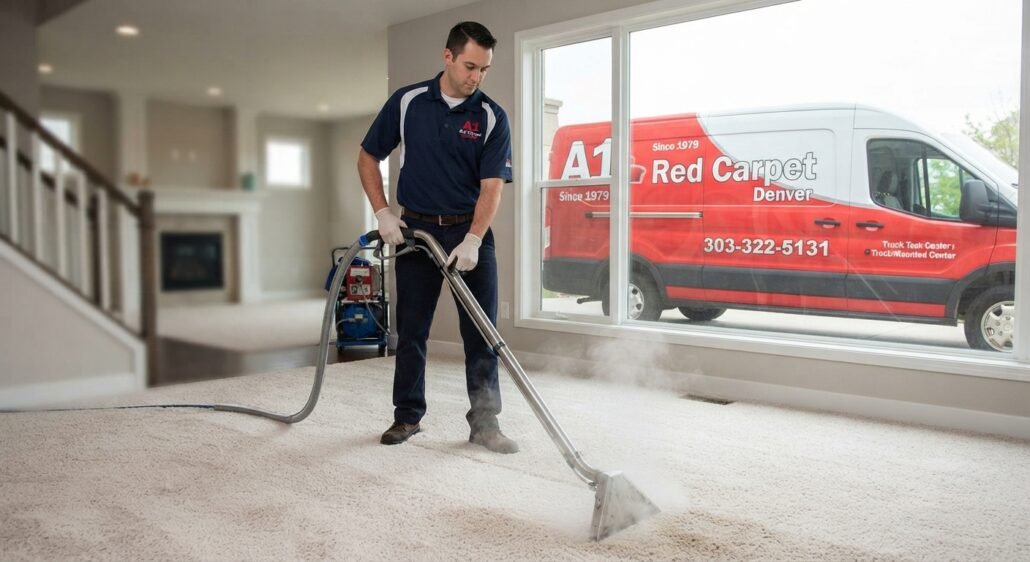
TL;DR: Pet smell in a house usually comes from three sources: dander and skin oils worked into carpet and fabric, litter box or bathroom residue, and air recirculating through HVAC ducts. A whole home approach treats all three instead of just the strongest smelling room. Homes with pets should deep clean carpet and upholstery every 6 to 9 months, and A1 Red Carpet treats the fabric side with enzyme cleaning and the air side with duct cleaning. Call 303-322-5131 for a free estimate.
How to get rid of pet smell in your house starts with knowing where the smell lives, not just where it is strongest. Pet odor rarely comes from one spot. It builds in carpet fibers, upholstery, and even the HVAC ducts that recirculate air through the house all day.
Denver pet owners have it slightly harder than owners in other climates for one reason. Forced air heat runs for months at a time in winter, and every heating cycle pushes trapped odor particles through the whole house instead of letting them fade out through open windows.
This guide covers the real sources of pet smell, how to treat each one, and when carpet and duct cleaning fixes what daily cleaning cannot reach. A1 Red Carpet has treated pet odor in Denver homes since 1979 with eco safe, enzyme based products.
Where Does Pet Smell in a House Actually Come From?
Pet smell comes from three main sources: dander and skin oils worked into carpet and fabric, urine or litter box residue, and air recirculating through HVAC ducts that carry odor particles from room to room. Treating only the strongest smelling room leaves the other two sources active, which is why the smell often returns within days.
Why Is Pet Odor Harder to Remove From Carpet Than From Hard Floors?
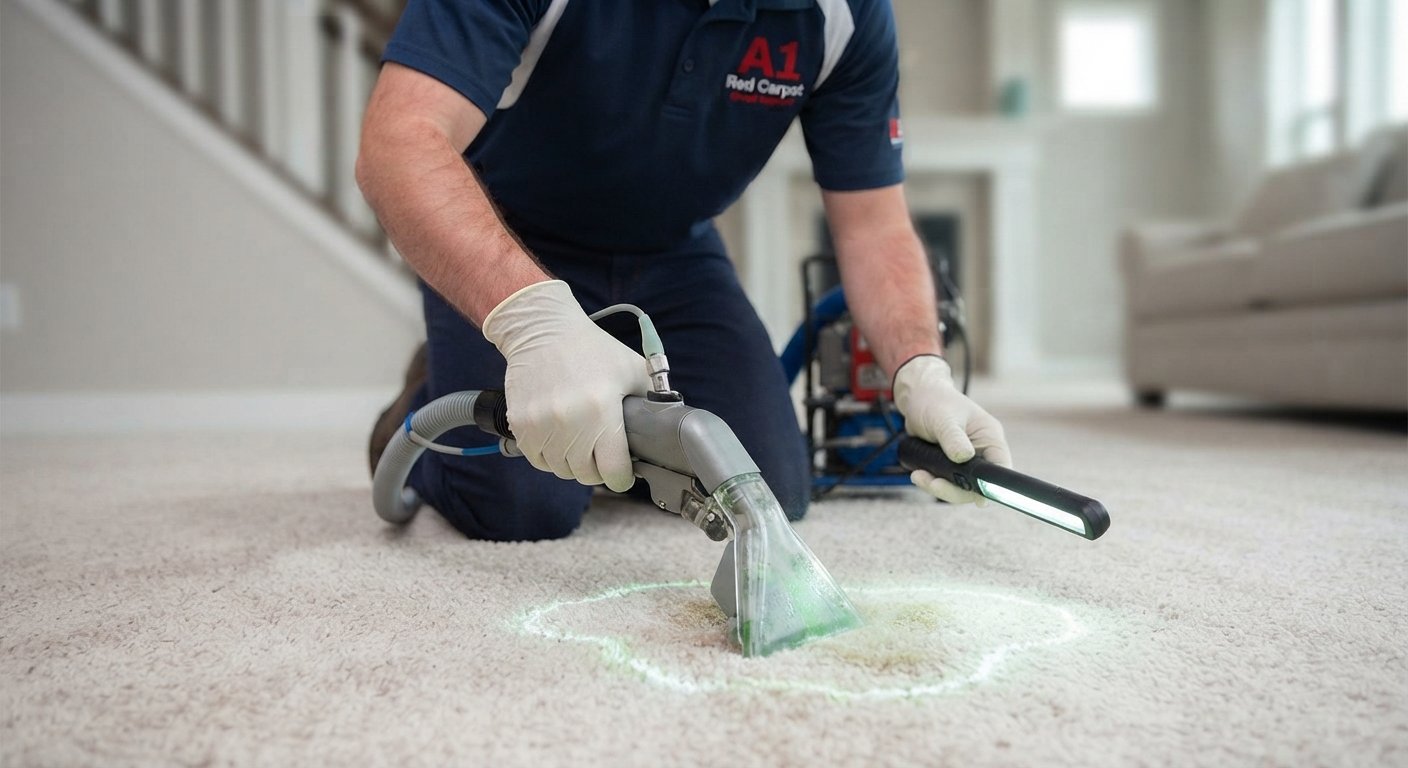
Carpet fiber holds onto pet dander and skin oils in a way hard flooring does not, since the fibers give odor causing particles somewhere to lodge. According to the Asthma and Allergy Foundation of America, pet allergens are sticky and accumulate in carpet fibers over time, which means the same buildup driving allergy symptoms is often what produces the smell.
Regular vacuuming picks up surface hair but does not pull oils out of the fiber base. That is the gap enzyme based carpet cleaning is built to close, breaking down the organic material instead of masking it with fragrance. If the smell traces back to a specific urine stain rather than general odor, our pet stain and odor removal guide covers that treatment directly.
Why Does My Dog Smell Bad Even After a Bath?
A dog’s odor often comes from a skin condition rather than dirt on the coat, so a bath alone will not fix it. According to Best Friends Animal Society, allergic reactions, yeast infections, and excess skin secretions all contribute to dog odor, and bathing without treating the underlying cause only masks the smell temporarily.
If bathing regularly is not solving the smell, a veterinary visit is the next step, since the source may be a skin or ear condition rather than the coat itself. No amount of home cleaning will resolve odor that starts with the pet’s health rather than the house.
How Do You Get Pet Smell Out of the Air, Not Just Surfaces?
Air duct cleaning removes dust, dander, and odor particles that have settled inside the ductwork and recirculate every time the furnace or air conditioner runs. Denver homes that run forced air heat for months at a time push that trapped material through every room repeatedly. A1 Red Carpet’s air duct cleaning targets that buildup directly, which surface cleaning in living spaces cannot reach.
A Room by Room Approach to Pet Odor
Litter boxes and pet bedding areas need daily attention, since waste left in place is the fastest source of new odor in a home. Furniture and rugs where pets sleep need enzyme treatment rather than fabric spray, since spray covers up smell without breaking down what is causing it. Our upholstery cleaning and rug cleaning services both use the same enzyme based approach for these areas.
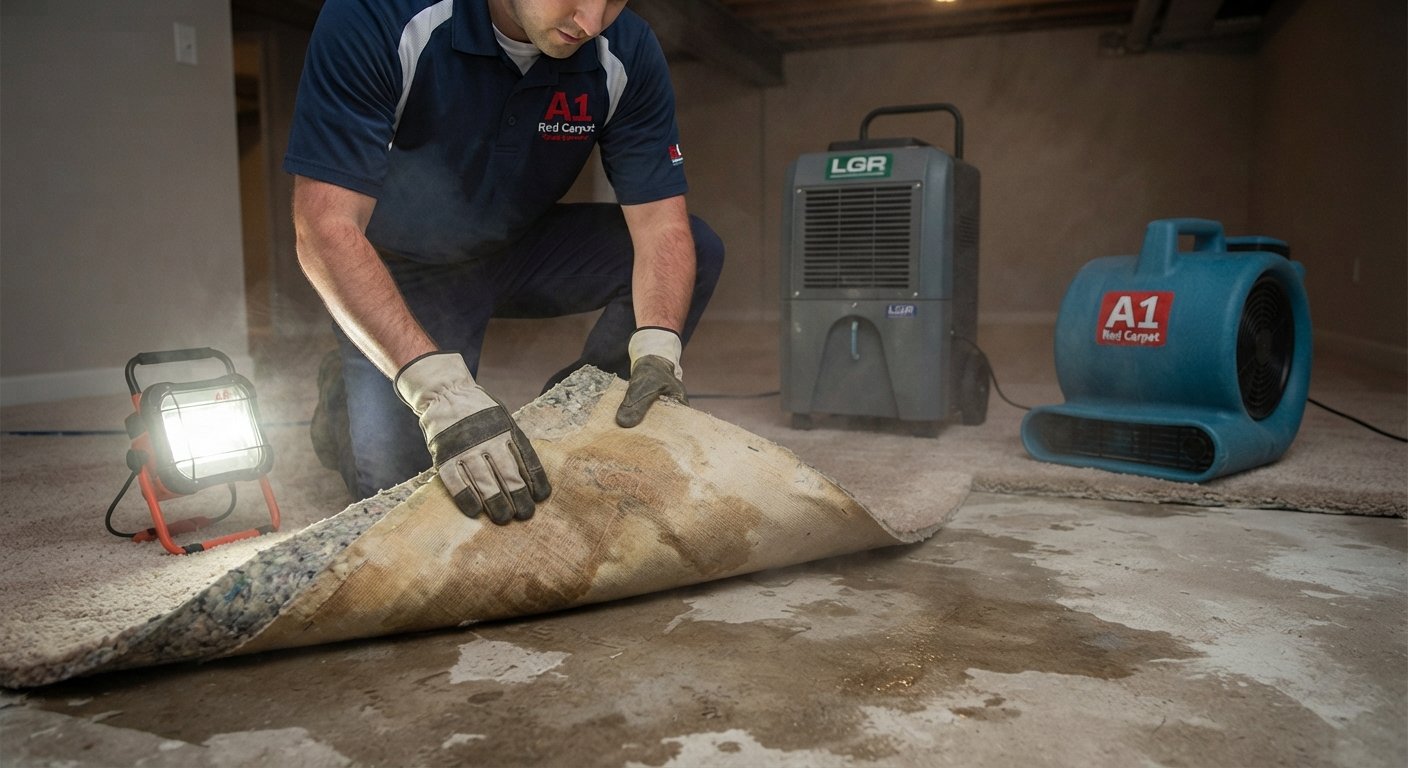
Carpeted hallways and living rooms, the highest traffic areas for pet dander, are the ones that benefit most from a full professional cleaning rather than spot treatment. Spot treating the same few square feet repeatedly usually means the smell is spreading through the pad underneath rather than staying contained.
How Do You Tell If the Smell Is in the Carpet or in the Air?
Leave a room closed for an hour, then open the door and smell it immediately. If the odor is strong right when the door opens but fades within a minute, the air and ducts are the main source. If the smell stays steady no matter how long the room airs out, it is more likely embedded in the carpet, upholstery, or padding itself.
Another simple test is pressing a clean white cloth firmly into the carpet for a few seconds in the area your pet uses most. A transferred odor or discoloration on the cloth points to the carpet fiber as the source rather than the air moving through the room.
When Should You Call a Professional for Pet Odor?
Call a professional once odor persists after regular vacuuming, bathing pets, and washing fabric, since that means the smell has moved past what surface cleaning reaches. A1 Red Carpet’s eco safe, enzyme based treatments break down the organic material causing the smell in carpet, upholstery, and rugs, rather than covering it with fragrance. Same day appointments are available across the Denver metro. Call 303-322-5131.
Getting a Pet Owning Home to Smell Clean Again
Pet smell in a house rarely has one source, which is why treating the living room alone rarely fixes it for good. Carpet fibers, upholstery, litter areas, and HVAC ducts all hold onto odor differently, and getting rid of the smell for good means treating each one.
A1 Red Carpet has used eco safe, enzyme based treatments in Denver pet owning homes since 1979, on carpet, upholstery, and rugs, plus air duct cleaning for the air itself. If you have already tried the usual fixes and the smell keeps coming back, that is the sign it is time for professional treatment.
Call 303-322-5131 for a free estimate, or book online through the Appointments page.

Frequently Asked Questions
What is the fastest way to get rid of pet smell in a house?
Start with the source, not the whole room: clean litter areas daily, wash pet bedding weekly, and treat carpet or upholstery your pet sleeps on with an enzyme cleaner rather than a fragrance spray. Enzyme cleaners break down the organic material causing the smell instead of masking it, which is why they work faster than air freshener on an existing odor.
Does air duct cleaning really help with pet odor?
Yes, because HVAC ducts collect dust and dander that recirculate through the house every time the system runs. In Denver, where forced air heat runs for months at a time, that recirculation happens far more often than in milder climates. Cleaning the ducts removes the source instead of just refreshing the air temporarily.
Why does my house still smell like dog after deep cleaning?
A lingering smell after deep cleaning usually means the odor has reached the padding under the carpet or the subfloor itself, not just the visible surface. It can also mean the pet has an ongoing skin or ear condition adding new odor faster than cleaning removes the old. A professional inspection can identify which of the two is happening.
How often should pet owners get their carpets cleaned?
Every 6 to 9 months for homes with pets, compared to 12 to 18 months for homes without. Pet dander and oils embed faster than normal foot traffic alone, so waiting the standard interval usually means living with more odor buildup than necessary in between cleanings.
Are enzyme cleaners safe to use around pets and kids?
A1 Red Carpet uses eco safe, enzyme based products that are safe for homes with pets and children. Enzyme cleaners work by breaking down organic material biologically rather than relying on harsh chemicals, which is part of why they work well on pet odor specifically.