
TL;DR: To get rust out of carpet, scrape off loose flakes, test a hidden spot, then blot on lemon juice or a mild white vinegar solution and let it sit. Blot, rinse with plain water, and dry the spot. Never use chlorine bleach, which sets rust stains. For big or stubborn stains, or rust that appears after a leak, call A1 Red Carpet at 303.322.5131.
You can get rust out of carpet at home with a mild acid, patience, and a clean white cloth. The trick is to dissolve the rust, not scrub it, and to find out where it came from so it does not come back.
Winter brings a surprising amount of rust into Denver homes. Snow shovels, metal boot trays, deicer cans, and wet boots all sit on carpet by the door for months. Leave damp metal on carpet for a few days and it leaves an orange ring behind.
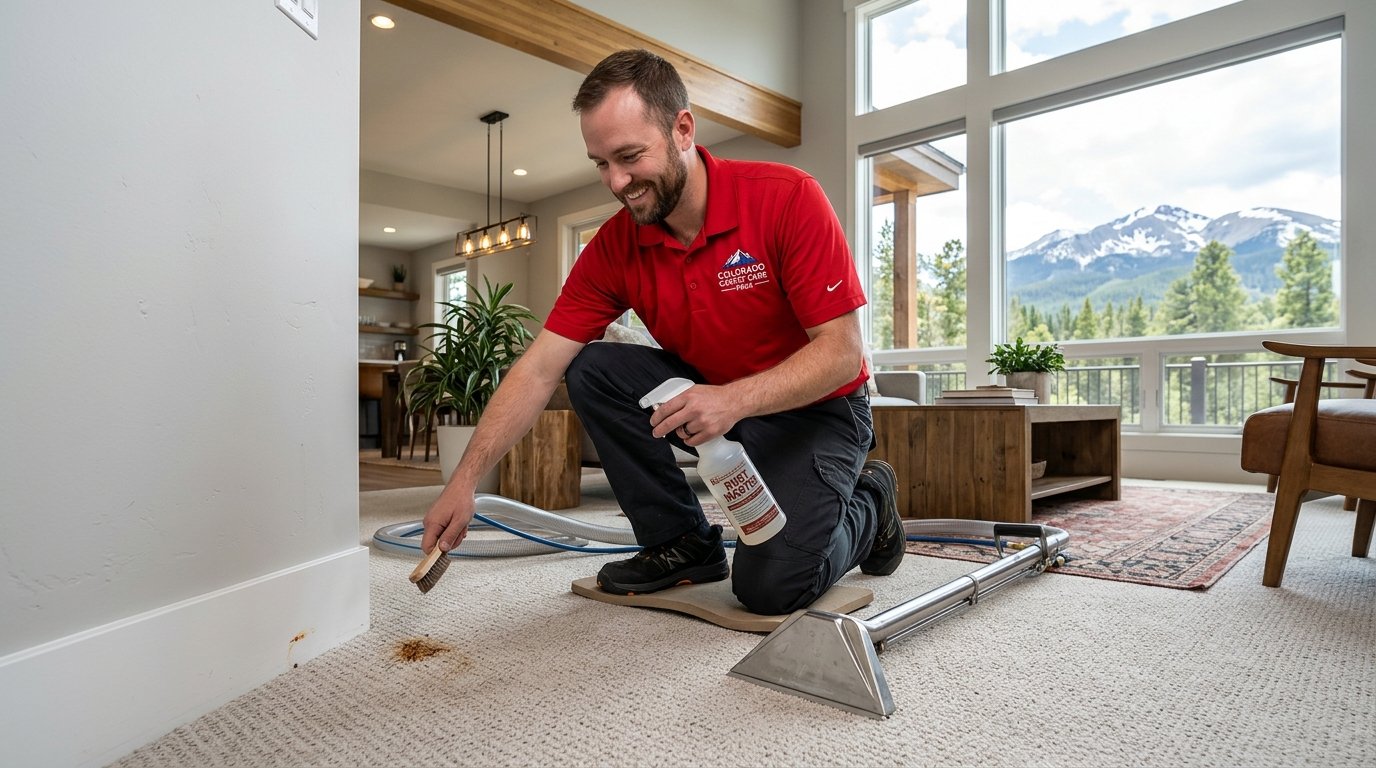
Rust can also be a warning sign. An orange or brown line along a wall can mean the metal tack strip under the carpet got wet and rusted. That points to a leak you have not found yet.
This guide covers the step by step method, which products work, which ones to avoid, and when to call a pro. A1 Red Carpet has cleaned carpets across the Denver metro since 1979, and these are the same steps our technicians share with customers.
How Do You Get Rust Out of Carpet?
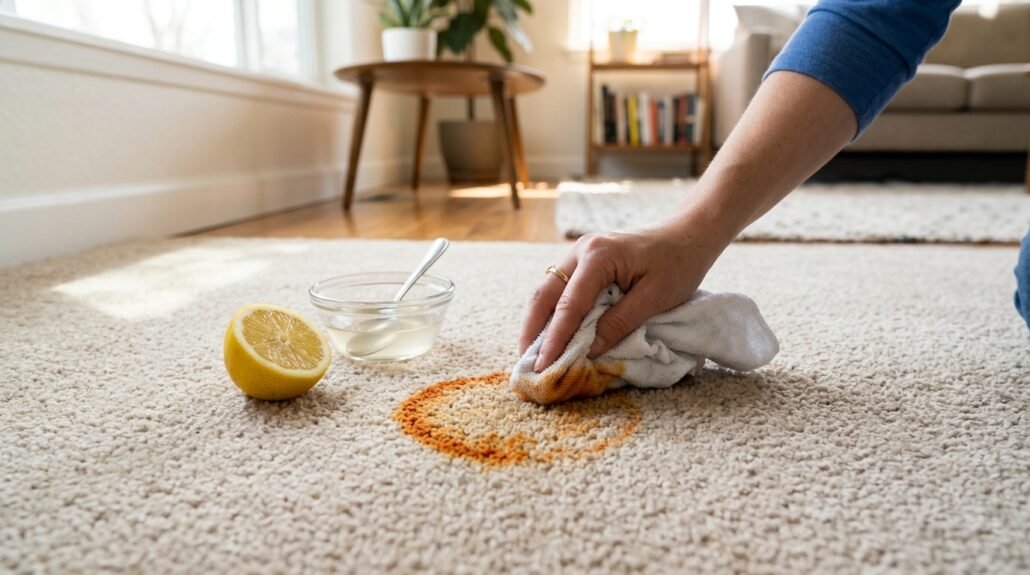
Scrape away loose rust with a dull knife and vacuum the flakes. Test a hidden spot, then blot lemon juice or a mild white vinegar solution onto the stain and let it sit for 10 to 15 minutes. Blot with a white cloth, rinse with plain water, and dry the area. Repeat if the stain is fading.
Here are the steps in order:
- Move the metal. Take away whatever caused the stain, such as a shovel, can, or furniture leg.
- Lift loose rust. Gently scrape flakes off the surface with a butter knife, then vacuum them up.
- Test first. Try your cleaner on a hidden spot, like inside a closet, and check for color change after it dries.
- Apply a mild acid. Dab on lemon juice, or a mix of 1 part white vinegar to 1 part water. Do not soak the carpet.
- Wait. Give the acid 10 to 15 minutes to loosen the rust.
- Blot, do not rub. Press with a clean white cloth. You should see orange transfer to the cloth.
- Rinse and dry. Blot with plain water to remove the acid, then dry the spot with a fan or a weighted towel.
Two or three rounds is normal for an older stain. If nothing changes after three tries, stop. More acid will not help, and it can start to affect the carpet color.
Where Is the Rust Coming From?
Finding the source keeps the stain from coming back. Most rust stains in carpet start with one of these:
- Winter gear by the door. Snow shovels, metal boot trays, ice melt containers, and wet boots with metal eyelets.
- Furniture. Metal legs, casters, and bed frames, especially after the carpet was cleaned and put back before it fully dried.
- Plants. Metal plant stands and pots with damp bottoms.
- Radiators and pipes. Drips from older radiators, baseboard heat, or water lines.
- Tack strip. The nails in the wooden strip that holds carpet to the floor rust when water gets under the carpet.
A small round stain usually points to something that sat on the carpet. A long line along a wall usually points to the tack strip, and that deserves a closer look.
Does Lemon Juice or Vinegar Remove Rust Stains?
Yes, for light and fresh rust stains. Rust dissolves in mild acids, and lemon juice and white vinegar are the gentlest acids you likely have at home. Apply a small amount, give it 10 to 15 minutes, then blot and rinse. Darker or older stains may need a stronger product or a professional.
The University of Georgia Extension recommends salt and lemon juice for rust on washable fabrics. On carpet, skip the salt, since it is hard to rinse out of a thick pile and can leave a crunchy residue. Lemon juice on its own works well.
Use white vinegar only, never red wine or apple cider vinegar, which can stain. Always rinse with plain water afterward. The Shaw carpet care guide explains that leftover cleaner can turn sticky and attract dirt, so the rinse step matters.
For tough stains, the same UGA guide lists an oxalic acid solution for carpet. Oxalic acid is poisonous, so UGA says to wear rubber gloves and test a hidden spot first. Keep it well away from kids and pets, and rinse the area thoroughly when you are done.
Are Commercial Rust Removers Safe on Carpet?
Some are, but read the label first. A few household rust removers contain hydrofluoric acid, one of the most dangerous chemicals sold for home use. It can cause severe burns that are not painful or visible right away. If the label lists hydrofluoric acid or says “Danger: Poison,” do not use it on carpet.
The Environmental Working Group lists hydrofluoric acid as an ingredient in at least one popular rust stain remover. Its label warns that the product may be fatal and can cause severe burns that may not be immediately painful or visible.
Doctors writing in the Medical Journal of Australia describe serious hand burns from a household rust remover. They also warn of a great risk of blindness if it reaches the eyes. A carpet stain is never worth that risk.
If you buy a rust remover, choose one labeled safe for carpet and upholstery. Follow the directions exactly, open a window, and wear gloves.
Can You Use Bleach on Rust Stains?
No. Chlorine bleach does not remove rust, and it can make the stain permanent. The University of Georgia Extension warns that chlorine bleach will set rust stains. Bleach can also strip color from carpet fibers, leaving a pale spot that cannot be fixed.
Shaw lists bleach among the household products with strong chemicals that can discolor or dissolve carpet fibers. Never mix bleach with vinegar, ammonia, or any other cleaner, either. The Washington State Department of Health explains that bleach plus an acid like vinegar gives off chlorine gas, and bleach plus ammonia makes toxic chloramines.
If you already tried bleach and the spot looks worse, stop and call a professional. The color may still be correctable with a carpet dye or a patch, and our carpet repair team can tell you which.
What If Rust Appears After Water Damage?
An orange or brown stain along a wall or doorway often means water reached the tack strip under the carpet. The nails rusted, and the rust wicked up into the fibers. Cleaning the surface will not fix the cause. Check for a leak, then dry or replace the wet pad and tack strip.
Look at what is on the other side of that wall. A bathroom, a water heater, a washing machine, or an exterior door with a bad seal are common culprits. Our guide to signs of water damage walks through what else to check.
Timing matters once you find the leak. The EPA says to dry water damaged areas within 24 to 48 hours to prevent mold. Rust stains mean the carpet has probably been wet longer than that.
Our water damage restoration team answers 24/7. We find hidden moisture with meters, dry the carpet and pad, and replace rusted tack strip so the stain does not return.
When to Call a Pro
Home methods work best on small, fresh stains on synthetic carpet. Call a professional when:
- The stain is large or covers a traffic area.
- It is on wool or a handmade rug. Our oriental rug cleaning team handles delicate fibers.
- The stain keeps coming back after it dries, which means rust or moisture is still underneath.
- It runs along a wall, which suggests a leak and rusted tack strip.
- Bleach or a harsh remover has already been used on the spot.
Our carpet stain removal service uses professional spotters made for rust, applied and rinsed out properly. For other common stains, see our homemade carpet stain remover recipes.
Dissolve It, Rinse It, Find the Source
Getting rust out of carpet takes a mild acid, a little time, and a thorough rinse. Lemon juice or diluted white vinegar handles most fresh stains. Skip bleach entirely, and check rust remover labels for hydrofluoric acid.
Most important, find out where the rust came from. A stain by the door is a shovel. A stain along a wall may be a leak.
A1 Red Carpet has helped Denver families with stubborn stains since 1979. Call 303.322.5131 or book an appointment online for a free estimate.
Frequently Asked Questions
Does WD-40 remove rust stains from carpet?
No, WD-40 is not a good choice for carpet. It is an oily product that can leave its own stain and attract dirt. Use lemon juice or a mild white vinegar solution instead, and rinse with plain water.
Can hydrogen peroxide remove rust from carpet?
Hydrogen peroxide is not the best tool for rust, and it can lighten some carpet dyes. A mild acid like lemon juice works better on rust. Always test any product on a hidden spot first.
How do you get old rust stains out of carpet?
Old rust stains take several rounds of lemon juice or diluted white vinegar, with a rinse after each. For stubborn stains, the University of Georgia Extension lists an oxalic acid solution, used with gloves. If the stain does not fade after three tries, call a professional.
Will rust stains come back after cleaning?
They can if the source is still there. Rust under the carpet, such as on a wet tack strip, can wick back up as the carpet dries. Remove the metal, fix any moisture, and rinse the spot well.
Can professional carpet cleaning remove rust stains?
Yes, in most cases. Professionals use rust spotters made for carpet, then rinse them out with hot water extraction. Rust that has been bleached or left for years may only lighten, not disappear.