
TL;DR: To deodorize carpet, find what is causing the smell first. For general odors, vacuum, sprinkle baking soda, leave it at least 15 minutes or overnight, and vacuum again. Musty smells point to moisture, and pet smells need an enzyme cleaner. If the odor comes back within days, it lives in the pad. Call A1 Red Carpet at 303.322.5131 for a deep clean.
You can deodorize carpet at home with baking soda and a vacuum, as long as the smell sits in the fibers. When it comes from the pad or the subfloor, no powder or spray will fix it for long.
Winter makes carpet odors harder to ignore in Denver. Windows stay shut for months, and the furnace pushes the same air through every room. A smell that started by the back door can follow you into the bedroom.
The fix starts with one question: what is causing the smell? A stale living room, a musty basement, and a spot where the dog had an accident all need different treatments. Covering them with a scented powder only hides the problem for a day or two.
This guide walks you through the basic method, how to match the fix to the smell, and when the odor is too deep for a home remedy. A1 Red Carpet has cleaned carpets across the Denver metro since 1979, and these are the same steps our technicians share with customers.
How Do You Deodorize Carpet?
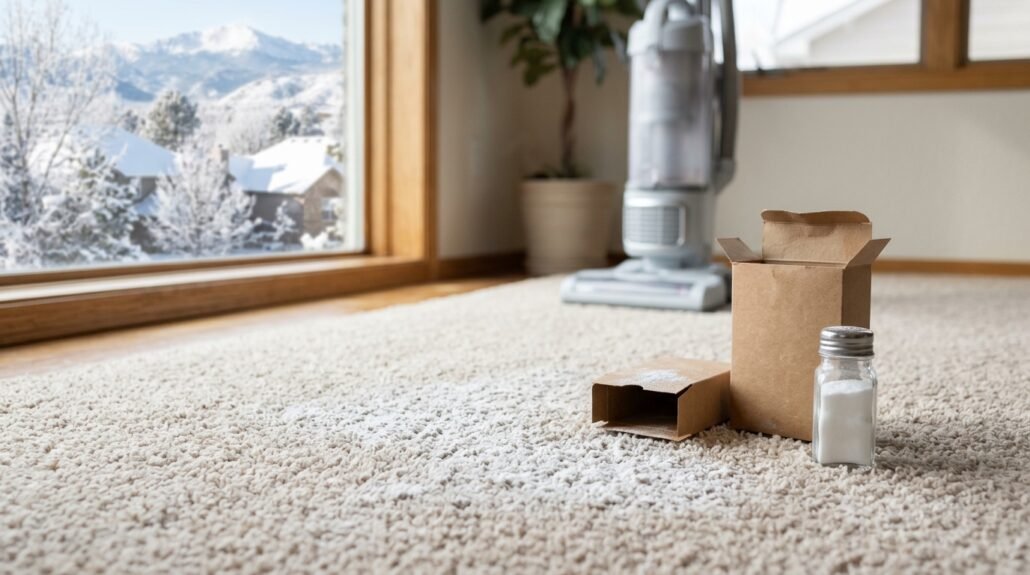
Vacuum the carpet well, then sprinkle a light layer of baking soda over it, with more on high traffic areas. Leave it at least 15 minutes, or overnight for stronger odors. Vacuum it all up slowly. Spot treat any area that still smells, rinse with plain water, and dry it fast.
Here are the steps in order:
- Vacuum first. Go slowly over the whole room to pull up hair, crumbs, and dust that hold odor.
- Test a hidden spot. Try baking soda in a closet corner first if you have never used it on this carpet.
- Sprinkle baking soda. Use a light, even layer, and add a little more in hallways and in front of the couch.
- Wait. Arm and Hammer suggests about 15 minutes, or overnight for a more thorough job. Keep kids and pets off the carpet while it sits.
- Vacuum again. Make several slow passes in different directions, then empty the bag or canister.
- Spot treat what is left. Use the right cleaner for the source, such as an enzyme cleaner for pet urine.
- Rinse and dry. Blot with plain water, then dry the spot with a fan. Moisture left in carpet creates new odors.
If the room still smells after one round, do not keep adding powder. That is a sign the odor is coming from somewhere baking soda cannot reach.
What Is Causing the Smell?
Every carpet odor has a source, and the source decides the fix. Use this table to narrow it down before you buy anything.
| What it smells like | Likely source | First thing to try |
|---|---|---|
| Musty or earthy | Moisture in the carpet or pad, often in basements or near a leak | Find and stop the moisture, then dry the area |
| Sharp, like ammonia | Pet urine that reached the backing or pad | Enzyme cleaner, applied deep enough to reach the pad |
| Sour or rotten | Spilled milk, food, or vomit | Clean the spot, rinse, and dry it fast |
| Smoky | Cigarette, fireplace, or wildfire smoke | Baking soda, then a professional cleaning |
| Stale or dusty | Built up soil, skin cells, and pet dander | Vacuum, baking soda, then a deep clean |
Smoke is the hardest to track because it settles everywhere. The IICRC notes that smoke odor attaches to upholstery, drywall, window coverings, and bedding, not just the carpet. Cleaning one floor will not clear the whole house. For heavy smoke after a fire, call a fire and smoke restoration company first.
Also notice where the smell is strongest. A single spot points to a spill or an accident. A whole room points to moisture, smoke, or carpet that is overdue for a deep clean.
Does Baking Soda Really Deodorize Carpet?
Yes, for light odors in the carpet fibers. Baking soda absorbs smells from the surface, and it is safe on most carpet when you vacuum it all up. It does not reach odors in the pad or subfloor, and it does not remove the source, like urine or mold, that keeps making the smell.
Think of baking soda as a reset for a carpet that smells stale, not a cure for a problem spot. It works best on general household odors: cooking smells, a damp dog, or a room that has been closed up.
A few tips help it work better:
- Keep the carpet dry. Sprinkle baking soda on dry carpet only. Wet baking soda turns into a paste that is hard to vacuum out.
- Go light. A thin layer works as well as a thick one and is much easier to remove.
- Give it time. Overnight works better than 15 minutes for heavier smells.
- Skip the scented powders around pets. Plain baking soda does the same job without added fragrance.
If you want to add a scent, do it after the odor is gone, not to cover it. A fragrance on top of a pet stain only gives you two smells.
Should You Use Vinegar on Carpet?
Yes, a mild vinegar solution can help with some odors and residue. Mix 1 part white vinegar with 1 part water, blot it onto the spot, and rinse with plain water. Test a hidden area first. Do not mix vinegar and baking soda together, because they cancel each other out.
The Shaw carpet care guide lists 1 part white vinegar to 1 part water as one of its spot cleaning solutions. Shaw also says to always follow up with water so no residue is left to turn sticky and attract dirt.
Vinegar has a strong smell of its own while it is wet. It fades as the carpet dries, so open a window or run a fan.
The popular trick of pouring vinegar over baking soda looks impressive, but the fizz is the two ingredients neutralizing each other. What is left is mostly salty water. We explain the chemistry in our guide to cleaning with baking soda and vinegar. Use them one at a time instead: baking soda dry, vinegar as a separate rinse.
How Do You Get a Musty Smell Out of Carpet?
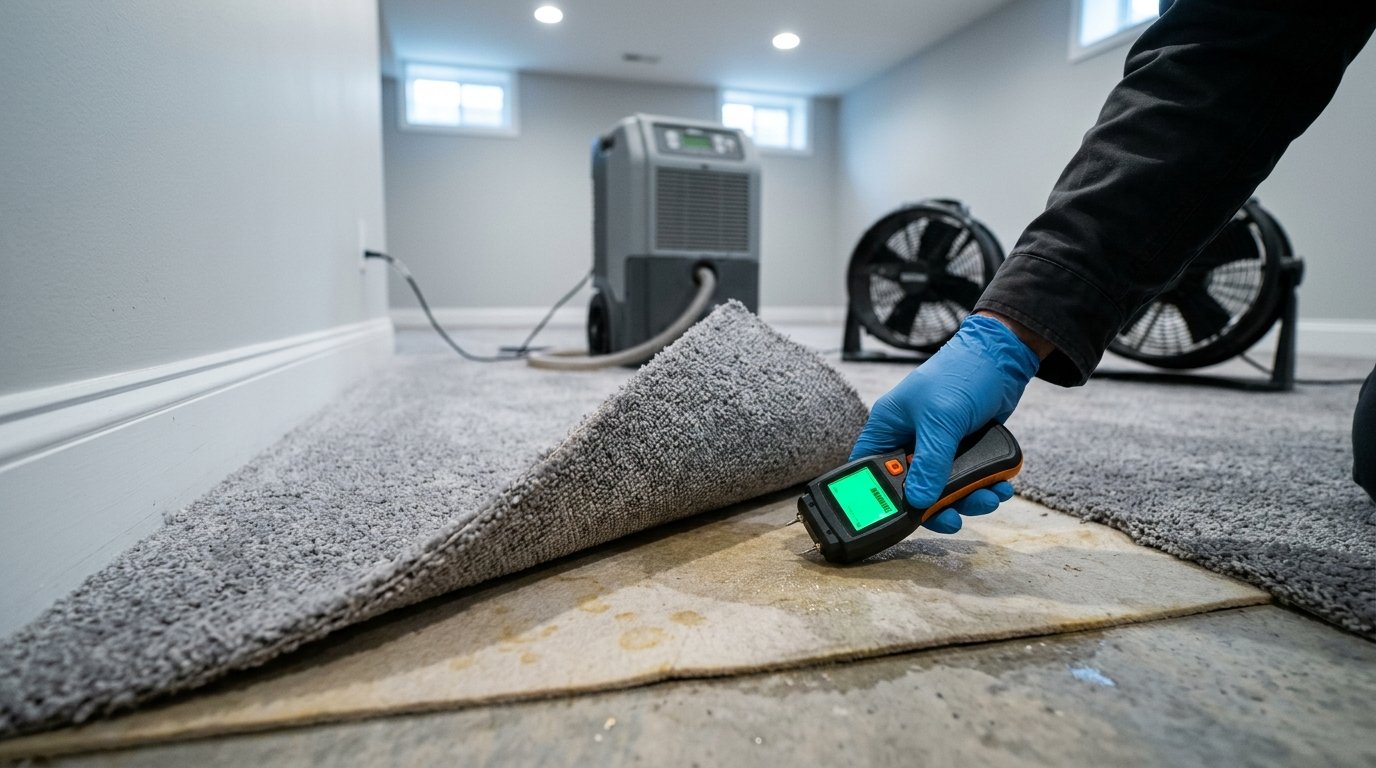
A musty smell means moisture, so the fix is drying, not covering. Find the source, such as a leak, a damp basement, or a spill that soaked the pad, and stop it. Dry the carpet and pad with fans and a dehumidifier. If the smell stays, the pad may be moldy and need professional help.
The EPA says to dry water damaged areas within 24 to 48 hours to prevent mold. The EPA also notes that a moldy smell with no visible source can point to hidden mold. In carpet, that usually means the pad or the subfloor underneath.
Denver air is dry most of the year, which fools a lot of homeowners. The top of the carpet dries fast, while the pad underneath stays wet. Press a dry paper towel into the carpet. If it comes up damp, the moisture is still there.
The EPA recommends keeping indoor humidity below 60 percent, and ideally between 30 and 50 percent. A dehumidifier helps in a damp basement, especially after summer storms.
Carpet that stays wet too long may not be worth saving. The EPA notes that porous materials like carpet may have to be thrown away if they become moldy. If you are dealing with a leak or flooding, our water damage restoration team answers 24/7 and uses moisture meters to find water you cannot see.
Are Carpet Deodorizers and Essential Oils Safe for Pets?
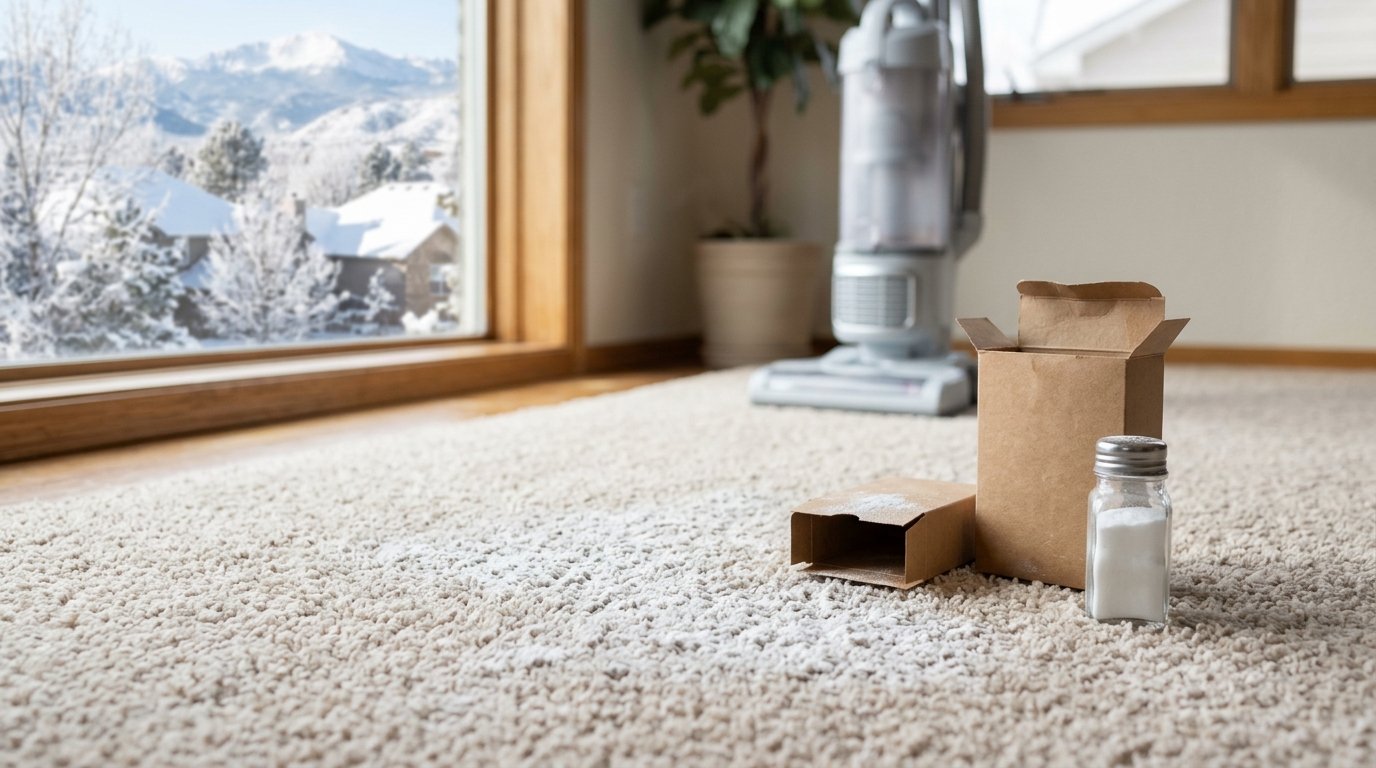
Plain baking soda is a safer choice than scented powders when pets are in the home, as long as you keep pets off the carpet until it is vacuumed. Be careful with essential oils. Concentrated oils can harm dogs and cats, and cats are especially sensitive to them.
The Pet Poison Helpline explains that cats lack a liver enzyme they need to break down essential oils. It also warns that active diffusers release tiny droplets of oil that can land on fur and get swallowed during grooming. Many homemade carpet deodorizer recipes mix essential oils into baking soda, so skip those if you have a cat.
Pet odors also need a different approach than general smells. Urine soaks through to the backing and pad, so surface powders cannot reach it. Our guides on getting pet urine smell out of carpet and getting rid of pet smell in your house cover those problems step by step.
For eco safe cleaning products that are safe for kids and pets, see our green carpet cleaning service.
When Deodorizing Doesn’t Work
Some smells come back no matter how much baking soda you use. These signs mean the odor is deeper than the carpet fibers:
- The smell returns within days of every treatment.
- It gets stronger on warm or humid days, or right after you clean.
- It is strongest in one spot, even when the carpet looks clean.
- The carpet feels damp, or the room smells musty.
- Pets keep going back to the same area.
The IICRC notes that the heat and humidity from cleaning can make odors stronger for a short time. That is why a smell that seems worse after you clean is a clue, not a failure. It tells you the source is still in the carpet, so it is time to call a pro.
Professional hot water extraction rinses soil and residue out of the carpet. It reaches much deeper than a powder or a spray. For pet odors, our pet stain and odor removal service treats the pad as well as the surface.
Regular deep cleaning also keeps smells from building up in the first place. The Carpet and Rug Institute recommends a professional deep clean every 12 to 18 months. Homes with pets, smokers, or heavy traffic often need it more often. Our carpet cleaning in Denver uses eco safe products and comes with a 100% guarantee.
Find the Source, Then Fix It
Deodorizing carpet works best when you treat the cause, not the smell. Baking soda and a good vacuum handle stale, everyday odors. Musty smells need drying, and pet odors need an enzyme cleaner that reaches the pad.
If a smell keeps coming back, it lives deeper than any powder can reach. That is when a professional deep clean pays off.
A1 Red Carpet has helped Denver families get rid of carpet odors since 1979. Call 303.322.5131 or book an appointment online for a free estimate.
Frequently Asked Questions
How long should you leave baking soda on carpet to deodorize it?
Leave baking soda on carpet for at least 15 minutes, and overnight for stronger odors. Keep pets and kids off the area while it sits. Vacuum slowly in several directions until no powder is left.
What is the best homemade carpet deodorizer?
Plain baking soda is the simplest and safest homemade carpet deodorizer. Sprinkle a light layer on dry carpet, wait, and vacuum. Skip recipes with essential oils if you have cats, since the Pet Poison Helpline warns that cats cannot break down those oils well.
Why does my carpet smell worse after I clean it?
Moisture and warmth from cleaning can wake up odors that are still in the carpet, such as pet urine in the pad. A carpet that stays wet too long can also start to smell musty. Dry the carpet fast with fans, and call a pro if the smell keeps coming back.
Can you deodorize carpet without a vacuum?
Not well with baking soda, because the powder has to be removed. Without a vacuum, open windows, run fans, and blot spots with a mild vinegar and water mix followed by a plain water rinse. A professional cleaning removes odors more completely.
How often should you deodorize carpet?
A quick baking soda treatment every month or two keeps most carpets fresh. Homes with pets or smokers may want it more often. The Carpet and Rug Institute also recommends a professional deep clean every 12 to 18 months.